For plumbers · 10 min read
Websites for plumbers: emergency and planned work
What a plumbing site needs: the emergency route, the planned-work route, boiler brands, your Gas Safe number, the towns you cover and what you charge.
Your site has two customers, not one
A leak coming through a kitchen ceiling at half nine at night and a bathroom refit booked for March are not the same customer. They are barely the same trade as far as the customer is concerned. One person is holding a bucket and a phone. The other has three tabs open and a spreadsheet.
Most plumbing sites are built for one of them and quietly lose the other. A site that is nothing but a red banner and the word EMERGENCY reads as expensive to the couple costing up a new bathroom. A site that is all soft-lit tiling photographs and a contact form gives the person with the bucket nothing to press.
You do not need two sites. You need one that sorts people in the first screen. A tappable phone number and a plain line about when you answer it, for the urgent half. A clear route into the planned work, for the half who are going to read. Everything below that can serve both.
| Emergency | Planned | |
|---|---|---|
| What they are doing | Standing in water, calling numbers | Comparing three plumbers over a week |
| What they need first | Do you answer, and how soon | What is involved, and what it costs |
| How much they read | One screen, maybe | The lot, twice |
| What loses the job | No phone number in reach of a thumb | Vagueness about price and timescale |

The emergency path
Put the number in the header of every page, as a real telephone link so a thumb dials it rather than copying it. Not an image. Not a form. The form can stay for people who are not in a hurry, and it will get used, but it is not the emergency route and pretending otherwise costs you the calls that pay best.
Then say when you answer. Real hours, written the way you would say them: "I answer until ten, seven days" is worth more than a badge that says 24/7 on a site where nobody picks up at two in the morning. If you do not do out-of-hours, write that down too. The person reading it will move on in four seconds instead of ringing you, being disappointed, and remembering the name for the wrong reason.
Give a realistic response time and hold to it. "Usually with you inside two hours across Leeds and Wakefield, longer if I am already on a job" is a sentence a customer can act on. Under-promising here is not modesty, it is the thing that stops the angry phone call at eleven.
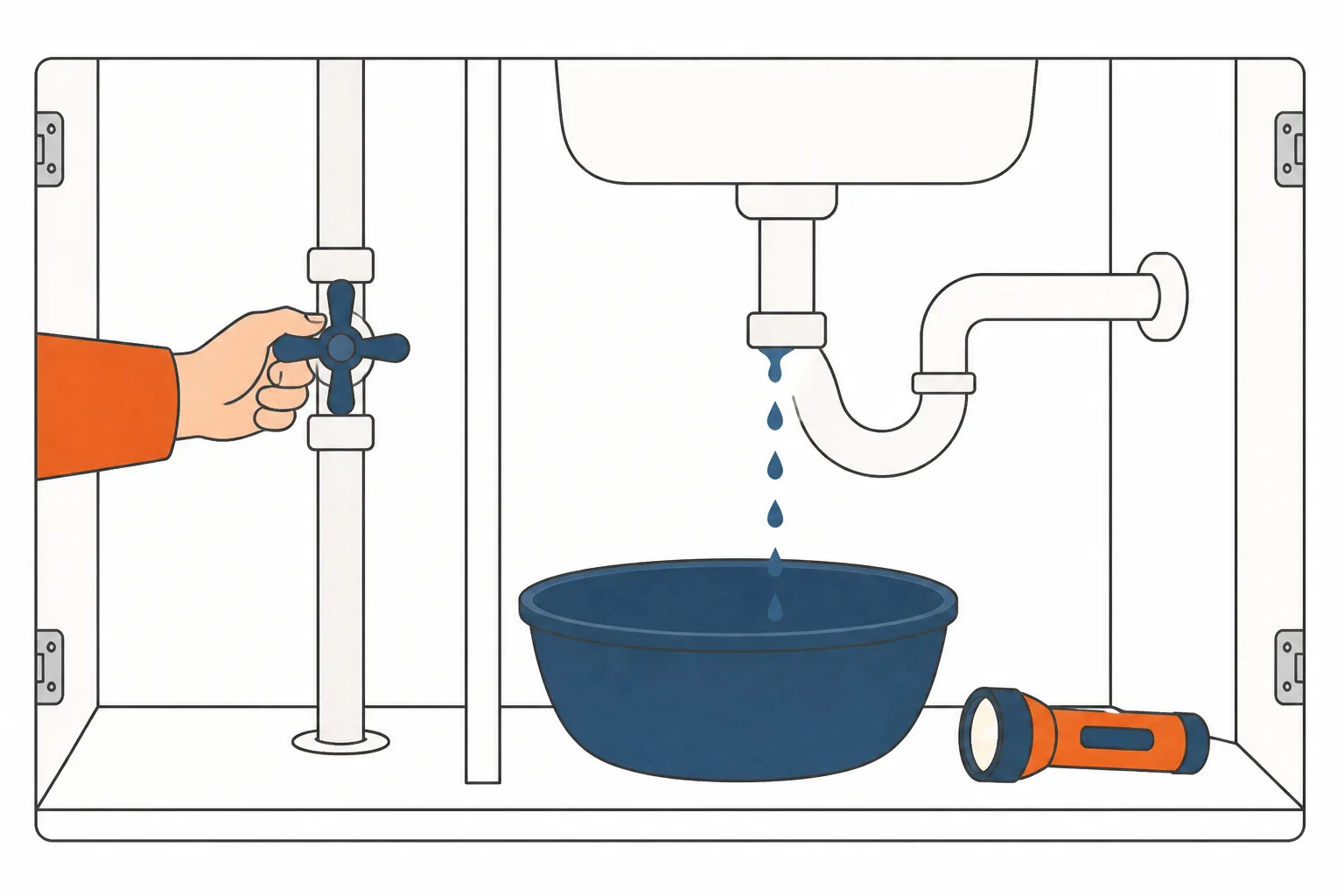
One more thing, and it is the cheapest trust you will ever buy: tell them how to stop the water. A short block on finding the stopcock, turning it clockwise, and putting a bowl under the leak while they wait. It costs you nothing, it sometimes saves a ceiling, and it reads like someone who has done this a thousand times.
Note. If you do not answer the phone at 3am, do not put 24/7 on the site. The customers who need 3am will find out, and the ones who do not will assume your prices match the badge.
Planned work is a different piece of writing
Boiler swaps, bathrooms, unvented cylinders, underfloor heating, a full rewire of the pipework in a Victorian terrace. These jobs are chosen slowly, and the person choosing is nervous about two things: the mess and the money. Not the pipework. They assume you can do the pipework.
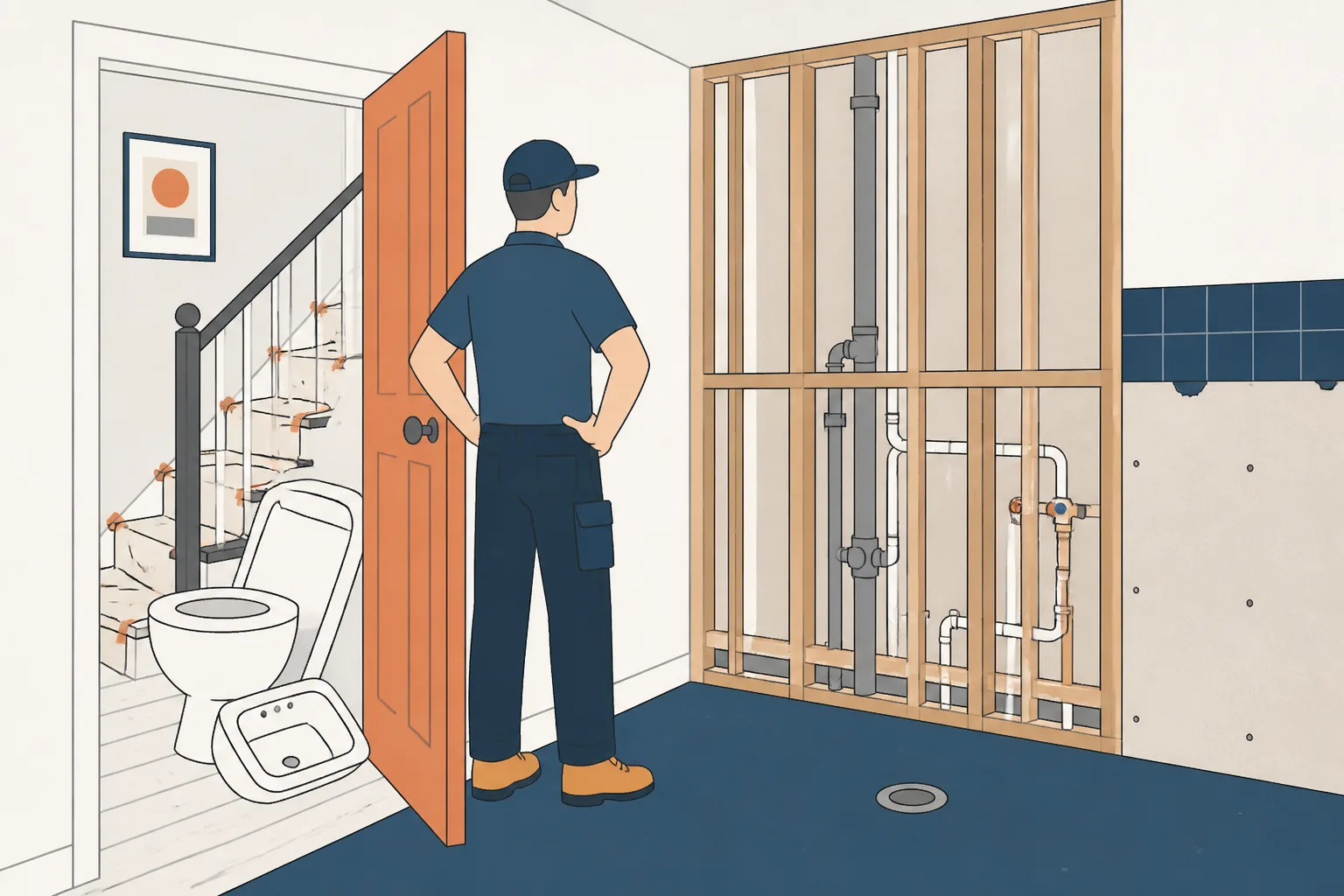
So write about the parts they are actually worried about. How many days. Whether they will be without hot water overnight, and whether you can leave the immersion running. Who takes the old suite away. Whether you dust-sheet the stairs. When you want paying, and how much up front. Whether the boiler warranty is five years or ten, and what registering it depends on.
This is the one place on a plumbing site where long copy earns its keep. Someone spending four thousand pounds will read six hundred words about how you work. They will not read six hundred words about your commitment to quality.
- How long the job takes, in days, including the making-good.
- What happens to the water and heating while you are working.
- Who supplies the fittings, and what happens if they choose their own.
- Payment stages, and the deposit if you take one.
- The guarantee on your labour, separately from the manufacturer warranty.
- What you will not do, so nobody books the wrong thing.
Name the boiler brands
People search by brand far more than plumbers expect. "Worcester Bosch engineer Doncaster", "Vaillant service near me", "Ideal boiler fault code". If the brand name is nowhere on your site, none of those searches can find you, and it is a small edit.
Accreditation is worth stating plainly because customers already know what it buys them. Manufacturer accreditation schemes let a registered installer offer a longer warranty than a standard fit gets, and that difference is often what decides the quote. If you are on one of those schemes, say the scheme name and say the warranty length you can offer. If you are not, do not imply it.
Be equally clear about the boilers you would rather not touch. Old back boilers, obscure imports, anything where parts take a fortnight. A line saying so filters out the calls you did not want and makes the rest of the list read as a considered choice rather than a claim to do everything.
- The brands you install, and any accreditation scheme you hold.
- The warranty length you can register, where it differs from standard.
- The brands you service and repair even though you do not install them.
- What you do not work on, and why, in one sentence.
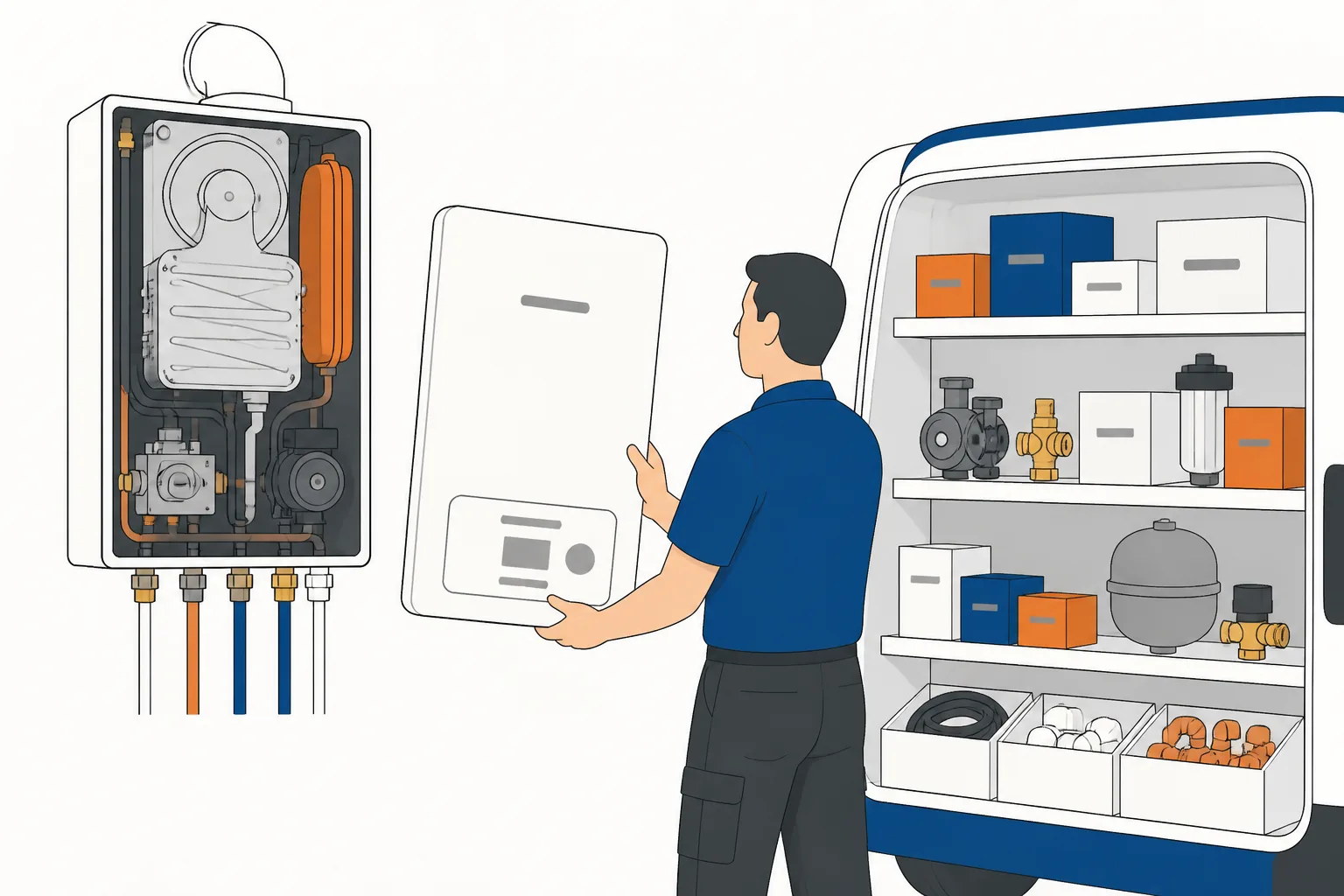
- Whether you carry common spares in the van or order them in.
Where the Gas Safe number goes
Anyone doing gas work in the UK has to be on the Gas Safe Register, and the sceptical half of your customers know it. Put your registration number in the footer of every page, so it is there wherever somebody stops reading. Put it again on the contact page and next to any mention of boilers, cookers or gas fires.
Then go one step further than most sites do and invite them to check it. A line saying the number can be looked up on the Gas Safe Register website reads as confidence, because only a business with nothing to hide points at the audit trail. Add that your engineers carry their ID card and are happy to be asked for it on the doorstep. Older customers in particular have been told to ask, and are often embarrassed to.
Gas is not the only registration worth naming. If you fit unvented cylinders you need the G3 qualification, and saying so is the difference between a customer trusting you with a hot water cylinder and ringing someone else. Oil work has its own scheme. Water regulations approval is worth a line if you have it. Each of these is a search term as well as a reassurance.
Note. Register the business number, list the qualifications by their real names, and never round up. One overstated credential undoes every honest sentence around it.

Name towns, not counties
Nobody types "plumber in the North West". They type the name of the town they live in, or they type "near me" and let the phone do it. A page that says you cover Greater Manchester matches nothing in particular. A page that names Sale, Altrincham, Urmston and Stretford matches four things exactly.
Write about the places you genuinely work, and be honest about the edge of the round. If you will travel past a certain point but charge for the journey, say what the charge is. That sentence saves a phone call each way and nobody has ever resented it.
Resist the temptation to spin up forty town pages with the name swapped out. Google has seen that trick since about 2012 and the pages read as hollow to humans too. Six real ones are better: mention the housing stock you meet there, the estate with the back boilers still in, the terraces where the lead supply pipe keeps turning up, a job you finished on that street last month. That detail is not decoration. It is the proof that you have actually been.
- The towns and larger villages by name, written out in the prose as well as a list.
- The postcode districts, for the people who search that way.
- A plain sentence on how far you travel and what you charge beyond it.
- Something specific about the local plumbing, per area, so the page is not a template.

Say a number
The usual objection to publishing prices is that every job is different. That is true, and it is also true of every trade that publishes a range anyway. What a range does is filter. The person who was going to argue about your call-out fee for twenty minutes never rings. The person who was quietly worried you would be four hundred pounds rings sooner.
You do not have to publish a fixed price for anything. A call-out fee, an hourly rate, and an out-of-hours rate cover most of it. For the bigger planned jobs, a range with a sentence about what moves it up or down is enough: access, the state of the existing pipework, whether the tiling is coming off.
The figures below are the sort of ranges seen across the UK, and they move a long way by region. London and the South East sit at the top; a lot of the North and Wales sit well below the middle. Work out your own numbers and put those on the site. The point of the table is the shape of the page, not the prices in it.
| Job | Typical range | What moves it |
|---|---|---|
| Hourly rate, weekday | £40 to £80 | Region, and London well above |
| Call-out fee, first hour | £50 to £100 | Whether parts are included |
| Out of hours or bank holiday | £100 to £200 first hour | Time of night, distance |
| Annual boiler service | £70 to £120 | Whether a safety certificate is included |
| Landlord gas safety check | £60 to £120 | Number of appliances |
| Combi swap, like for like | £1,800 to £3,500 | Brand, warranty, flue and pipework |
| Blocked sink or toilet | £80 to £180 | Whether it needs rodding or jetting |
Note. Write "from" and "typical" and mean them. A price that turns out to be a floor nobody ever pays does more damage than no price at all.

Common questions
- Mobile number or landline on the site?
- Mobile, if that is the one you actually answer. A landline that diverts looks tidier and costs you calls when the divert fails. Put one number on the site and answer it.
- I am not Gas Safe registered. Can I still have a plumbing site?
- Yes, and you should be explicit about it. Say clearly that you do bathrooms, leaks, cylinders and wet work but not gas appliances. Being upfront reads as professional and stops you fielding calls you cannot take.
- Do I need a separate page for each boiler brand?
- Only for the two or three you install most, and only if there is something real to say about them. A single well-written page naming every brand you work on beats eight thin pages that say the same thing with the name changed.
- Will publishing my call-out fee lose me work?
- It loses you the callers who were going to haggle, which is the point. The people who ring after reading the number have already accepted it, and those calls convert far better than the ones that start with what do you charge.
- Should I take bookings online?
- For services, safety checks and other planned work, a booking form saves everyone a phone call. For emergencies, no. Nobody with water coming through a light fitting fills in a form.