Guide · 11 min read
How to turn website visits into leads
Traffic is not the problem. Where trade websites lose the call — the first screen, the phone button, the form, and how fast you ring back.
Visits are not leads
A site can get three hundred visits a month and produce four calls. The owner is told he needs more traffic, spends money on more traffic, and gets six calls instead of four. The leak was never the number of people arriving. It was what happened in the twenty seconds after they got there.
Think about who is actually on the page. A woman in Bury standing in a kitchen with water coming through the ceiling. A landlord who needs an EICR before a tenancy starts on the 1st. Somebody whose car failed its MOT this morning. They are not browsing. They have opened four tabs, they will ring two or three people, and the ones who do not answer quickly and clearly are not in the running.
So the useful question is not how to get more visitors. It is: at what point does someone who wanted to call you decide not to? There are only about five places that happens, and every one of them can be fixed in an afternoon without spending anything.
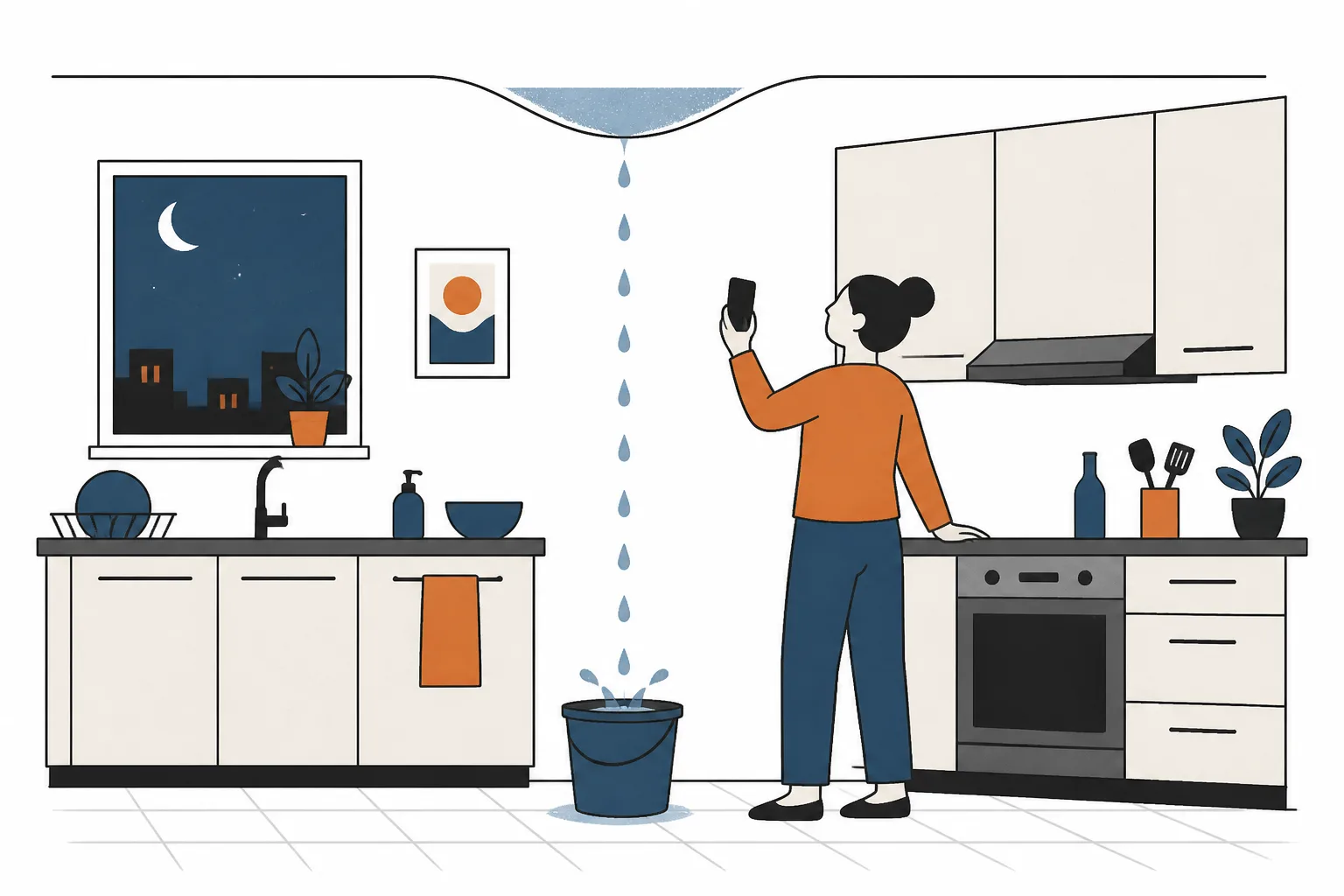
The first screen has one job
On a phone, the first screen is roughly what fits above the keyboard on a bus. That is your entire opening argument. Most trade sites spend it on a stock photograph of a smiling man in overalls and the words "Quality workmanship you can trust", which tells a reader nothing they could not have assumed.
What belongs there is the three answers — what you do, where you do it, and how to reach you — written the way a person would say them. "Gas engineer. Boilers, heating and landlord certificates. Bolton, Bury and Radcliffe." A visitor now knows in two seconds whether to keep reading or go back to the search results, and both of those are fine outcomes. What is not fine is scrolling for ten seconds to find out.
Below that, one piece of proof and the phone number again. That is the whole first screen. Everything else — the services, the photographs, the areas you cover, the reviews — is for the person who has already decided you are worth a look.
- The trade, named plainly. "Electrician", not "electrical solutions provider".
- The two or three towns you actually work in, written out.
- The phone number, large, tappable, without scrolling.
- When you answer it. "Answered until 8pm, seven days" is worth more than a contact form.
- One line of proof — Gas Safe number, years in the trade, the reviews figure with a link to them.
Note. Open your own site on your phone, on mobile data, and do not scroll. If you cannot tell what the business does, where it works and how to ring it, that is the first fix and it is bigger than everything else on this page.

Make the phone number a phone call
Most people who contact a tradesperson want to talk to one. They have a leak or a smell of burning and they want a voice, not a form. The single highest-value thing on a trade website is a phone number that dials when you touch it, and a surprising number of sites do not have one.
The usual failures are all mechanical. The number is part of the header image, so it cannot be tapped and cannot be copied. It sits only on the contact page, three taps away from wherever the visitor landed. It is written with spaces or brackets that break the link. Or it is a premium 0845 number, which reads as a call centre and costs the caller money — a mobile or a local landline says small local business, which is exactly what you are selling.
Put the number in the header on every page, as real text with a tel link behind it. On mobile, add a bar fixed to the bottom of the screen with two buttons: Call, and one other route — WhatsApp for cleaners, gardeners and salons where a photo helps, or a form link for jobs people prefer to write out. The bottom of the screen matters because that is where the thumb already is.
- The number as selectable text, never inside an image.
- A tel link on every instance of it, so one tap dials.
- Header on every page, plus a fixed call bar on mobile.
- A mobile or local landline rather than 0845 or 0800.
- Your real hours next to it, including the honest answer about evenings.
- If you divert to voicemail, a greeting that says when you will ring back — and then do.

Short forms get filled in
Every field you add loses you leads. That is the whole rule. A form asking for name, email, phone, address, postcode, service required, preferred contact method, budget and how you heard about us is a form that gets abandoned in a van at half seven in the evening.
You need enough to ring the person back and know roughly what the job is. Name, phone, and one box they can type into. Postcode if drive time genuinely decides whether you take the work, which for most trades it does. Everything else you can ask on the call, where it takes four seconds instead of four fields.
Two more things worth doing. Let people attach a photo — a picture of the fuse box, the tap, the roof from the garden — because it saves a visit and it makes the lead more serious. And avoid a captcha if you possibly can; a hidden field that only a bot would fill in stops nearly all the spam without making a real customer prove they are human at eight in the morning.
Then the confirmation. Not "Thank you, your message has been sent". Say what happens next and repeat the number: "Got it. I will ring you back today — if it is urgent, call 07700 900123." That sentence stops the person immediately going off to fill in somebody else's form.
| Field | Keep it? | Why |
|---|---|---|
| Name | Yes | You need something to say when they pick up |
| Phone | Yes | This is the one that turns into work |
| What is wrong | Yes — one free text box | Let them describe it their way |
| Postcode | Usually | Decides whether the job is worth the drive |
| Photo upload | Yes, optional | Saves a visit and filters the serious ones |
| Optional at most | You are going to phone them | |
| Full address | No | Ask on the call, once you have said yes |
| Preferred contact time | No | Sounds like you are hard to reach |
| How did you hear about us | No | Your admin, paid for with their patience |
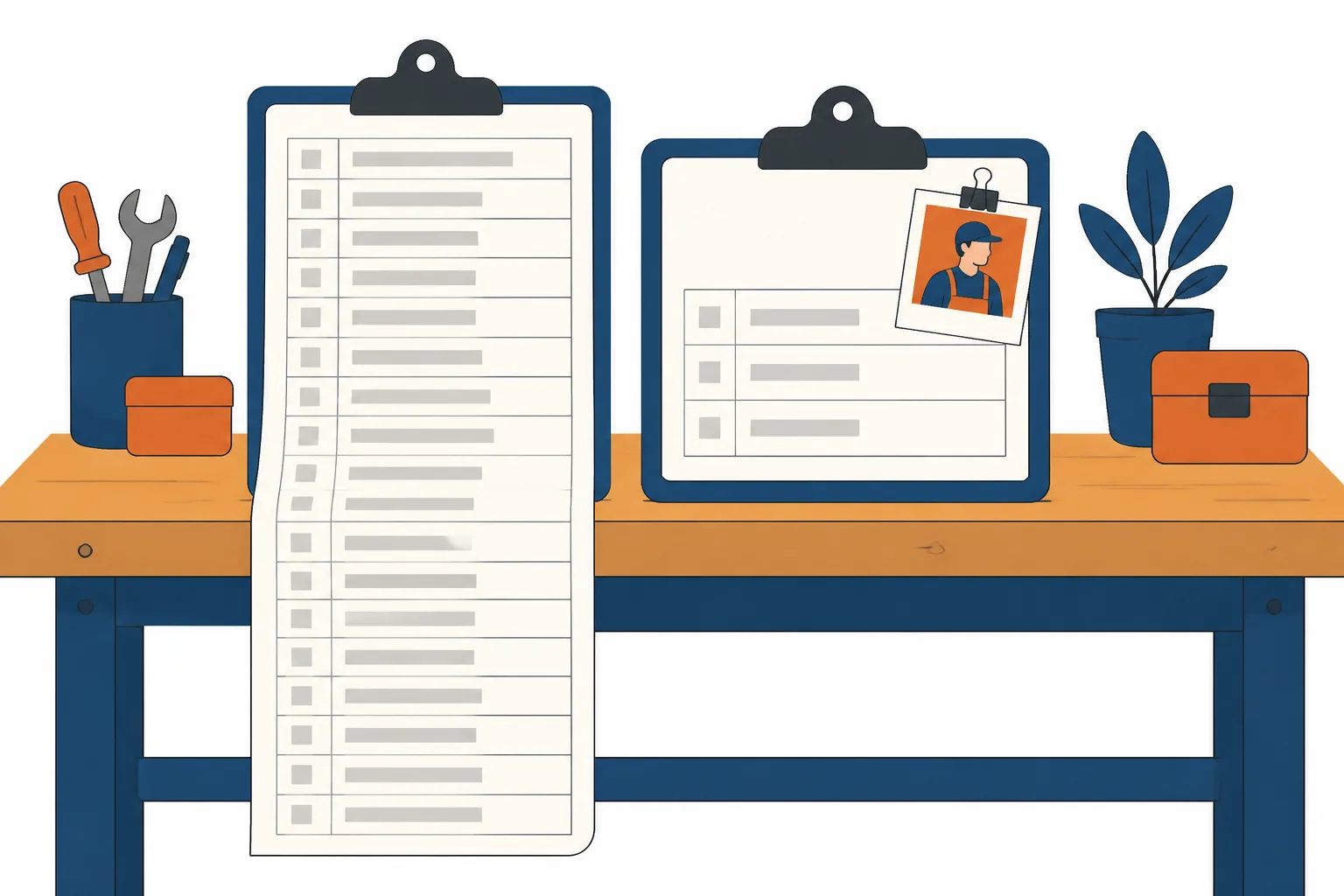
Speed beats almost everything else
A lead goes off like milk. Someone who sends a message at ten past nine is still deciding at ten past nine. By the afternoon they have spoken to two other people and one of them can come Thursday. Very often the job goes to whoever answered first, not whoever was best or cheapest, and that is the least fair and most reliable thing about this trade.
You cannot answer the phone from under a bath. Nobody expects you to. What you can do is close the loop fast in some cheap way. A text at the next tea break — "This is Dave, saw your message about the boiler, I am in a loft in Thatcham till four, can I ring you at five?" — converts nearly as well as picking up, because the person now knows a human has them and can stop ringing round.
Then check your missed calls twice a day, at lunch and at the end. A missed call is a lead that cost you the same as any other and most tradespeople never ring them back. If the volume is genuinely beyond you, an answering service that takes a name and number runs somewhere in the region of £50 to £150 a month depending on how many calls — worth comparing against the value of one job you would otherwise lose.
Note. If you do one thing off this page, make it this: reply to every lead from the site the same working day, even if the reply is only to say when you will ring. It costs nothing and it beats a redesign.
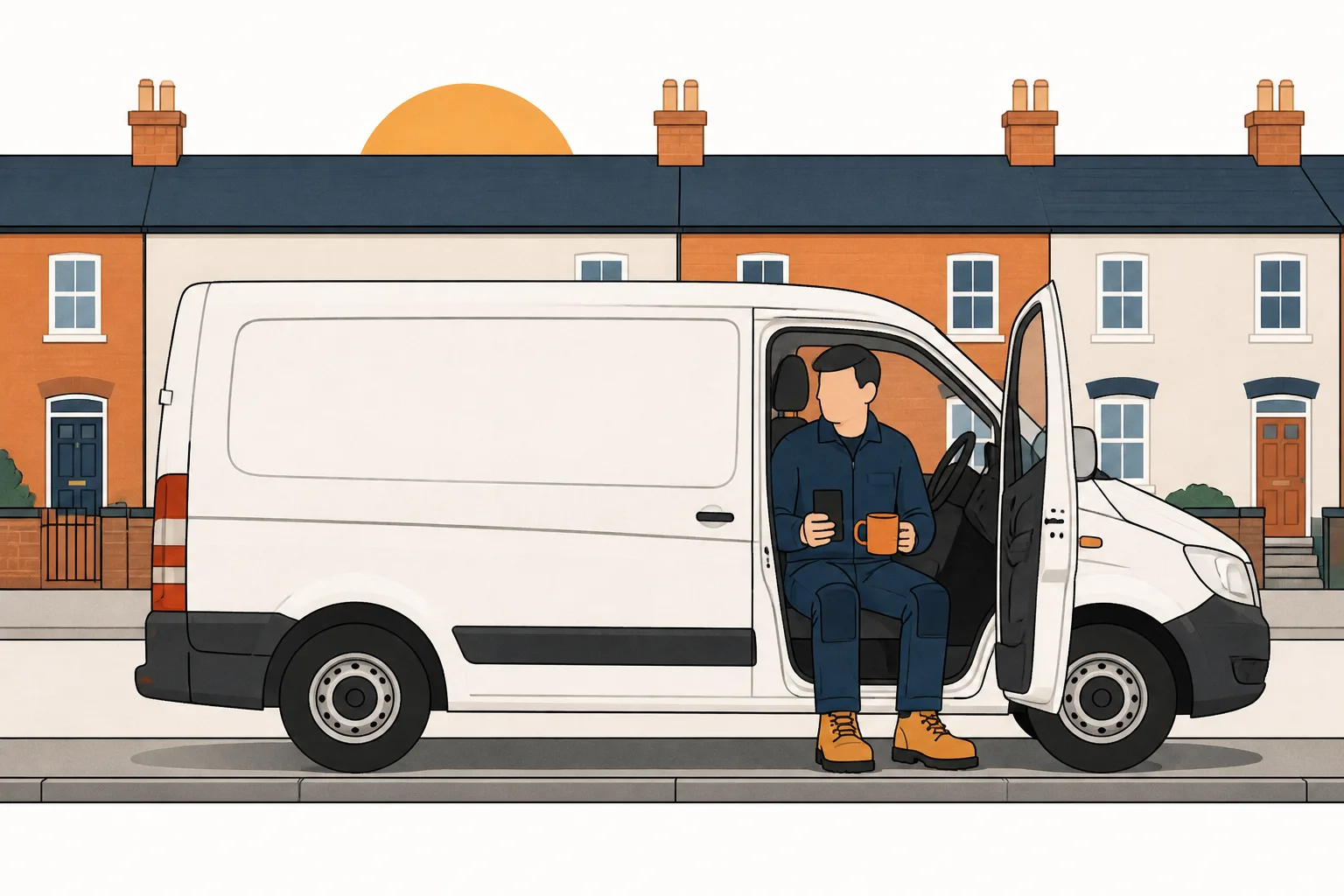
Trust signals that are actually signals
The reason people hesitate before ringing a tradesperson is not price. It is the story everyone has heard about somebody who took a deposit and never came back. Your site is being read for evidence that you are a real, findable, accountable person, and most of what gets put on trade sites is not evidence.
A signal only counts if it would be costly or awkward to fake. A Gas Safe registration number can be checked in thirty seconds on the register, so it means something. "Fully qualified professionals" cannot be checked, so it means nothing. Photographs of your own finished work in recognisable local houses mean something. A stock image of a spotless American kitchen means the opposite of what it was chosen to mean.
The strongest one is usually the cheapest: your name and your face. "I am Steve, I have been doing this in Salford for eleven years, and you will be dealing with me and not a call centre." It sounds small. It is doing more work than every badge on the page put together, because it tells the reader exactly who is accountable if something goes wrong.
| What is on the page | What it proves |
|---|---|
| Gas Safe / NICEIC number, written out | Checkable in half a minute. Real |
| Photos of your jobs, taken on your phone | You have done this work. Real |
| Your name, your face, your town | Someone is accountable. Real |
| A Google reviews count linked to the reviews | Verifiable by anyone. Real |
| Public liability cover, with the amount | Answers the fear they will not say out loud |
| "Over 25 years combined experience" | Two people and a bit of arithmetic. Nothing |
| Badges that do not link anywhere | Images. Anyone can save them |
| "5 star rated" with no source | Nothing, and it makes the real bits look worse |
| Stock photos of vans and models | Recognised instantly. Costs you trust |
Find your own leak in twenty minutes
You cannot judge your own site from your laptop, because you already know what the business does and where the phone number is. You need a stranger and a phone, and you almost certainly have one of each within reach.
Borrow a phone off someone who does not know your business — a customer you get on with, your brother-in-law, whoever is in the kitchen. Give them a real task: "you have got no hot water and you live in Radcliffe, find out if this lot can help and get hold of them." Then say nothing at all and watch. Where they pause, where they scroll back up, where they pinch to zoom, and how long the whole thing takes.
Then send yourself a message through your own contact form, at half nine on a Tuesday evening, and see what actually arrives. It is worth checking every few months. Forms break quietly — a mailbox fills up, a plugin updates, the address it forwards to belongs to a laptop you sold — and nothing tells you. The site looks fine. The leads simply stop.
- On mobile data, not the office wifi. If it takes six seconds to load, you have lost people before any of the rest matters.
- Time how long until the tester can say what you do and where. Over ten seconds is a problem with the first screen.
- Count the taps from landing to dialling. Two is right. Four means the number is buried.
- Submit the form yourself and confirm the email lands somewhere you read.
- Reply to that test message as if it were real, and note how long you took. That is your actual response time.

Common questions
- How many leads should a small trade site get?
- It depends entirely on how many people find it, so the number on its own tells you nothing. The figure worth watching is the share of visitors who ring or send something, and whether it moves when you change the first screen or the call button. Compare your site against itself last month, not against somebody else.
- Should I put a live chat or a chatbot on the site?
- Usually not. For a one-van business it adds a channel you cannot man, and an unanswered chat window is worse than no chat window. A tappable phone number and a WhatsApp button do the same job and go straight to a phone you already carry.
- Will putting prices on the page cost me leads?
- It will cost you some, and they are mostly the ones you did not want. A call-out fee and honest ranges filter out people shopping purely on price and give everyone else the confidence to ring. Say plainly that they are ranges and that the price depends on the job.
- I get plenty of calls but they are the wrong jobs. What do I change?
- That is a copy problem rather than a button problem. Be more specific about the work you want and plain about what you do not do — "commercial and landlord work, no domestic call-outs" turns away the wrong calls before they happen. Naming a minimum charge does the same thing quietly.
- Is spam through the contact form a reason to remove it?
- No. Add a hidden honeypot field and, if it is still bad, a simple question a bot will not answer. Removing the form loses you the customers who will not ring — landlords, letting agents, people at work who cannot take a call.