For Australian tradies · 13 min read
What an Australian tradie website has to do
Two shapes of tradie site: one triages the job and rings back, one lets the customer take a slot. Which suits your work, and what each has to show.
Two shapes of site, and you have to pick one
Most tradie sites are built as a brochure with a phone number at the top, then judged on whether the phone rings. The ones that work are built around a decision the brochure never makes: what happens in the ninety seconds after somebody decides to contact you.
There are two answers. A job-triage site asks what has gone wrong, takes a photo and a suburb, and promises a call back inside a stated window. A calendar-booking site shows what you do, how long each job takes, and which dates are free, and lets the customer take one. Both are respectable. They are not interchangeable, and building the wrong one costs you the jobs you wanted most.
Whichever you pick, four things have to be on the page before anyone contacts you: what work you take, which suburbs you drive to, what happens when they send the form, and when they will hear back. The table below is that last question asked six ways.
| What the customer wants | Job-triage site | Calendar-booking site |
|---|---|---|
| To describe what has gone wrong | A box for it, and somewhere to put a photo | Nowhere to put it, so they ring instead |
| To know when you can come | A call-back window — today, before six | A date and a time they choose themselves |
| To be told whether it is urgent | You read it and you decide | They decide, and they take the earliest slot |
| To know what it will cost | A call-out fee and a range, priced on site | A set price for a set job, shown before they book |
| To avoid ringing anyone at all | Partly — you still ring them back | Yes, at ten at night from the couch |
| To know you will actually turn up | Your call back is the confirmation | Your reply is the confirmation, not the form |
Note. If you cannot say which column your business lives in, you are who this page is for. Most tradies want triage for breakdowns and a calendar for everything planned, which is a real answer — the site then has to show both without muddling them.

When triage is the right shape
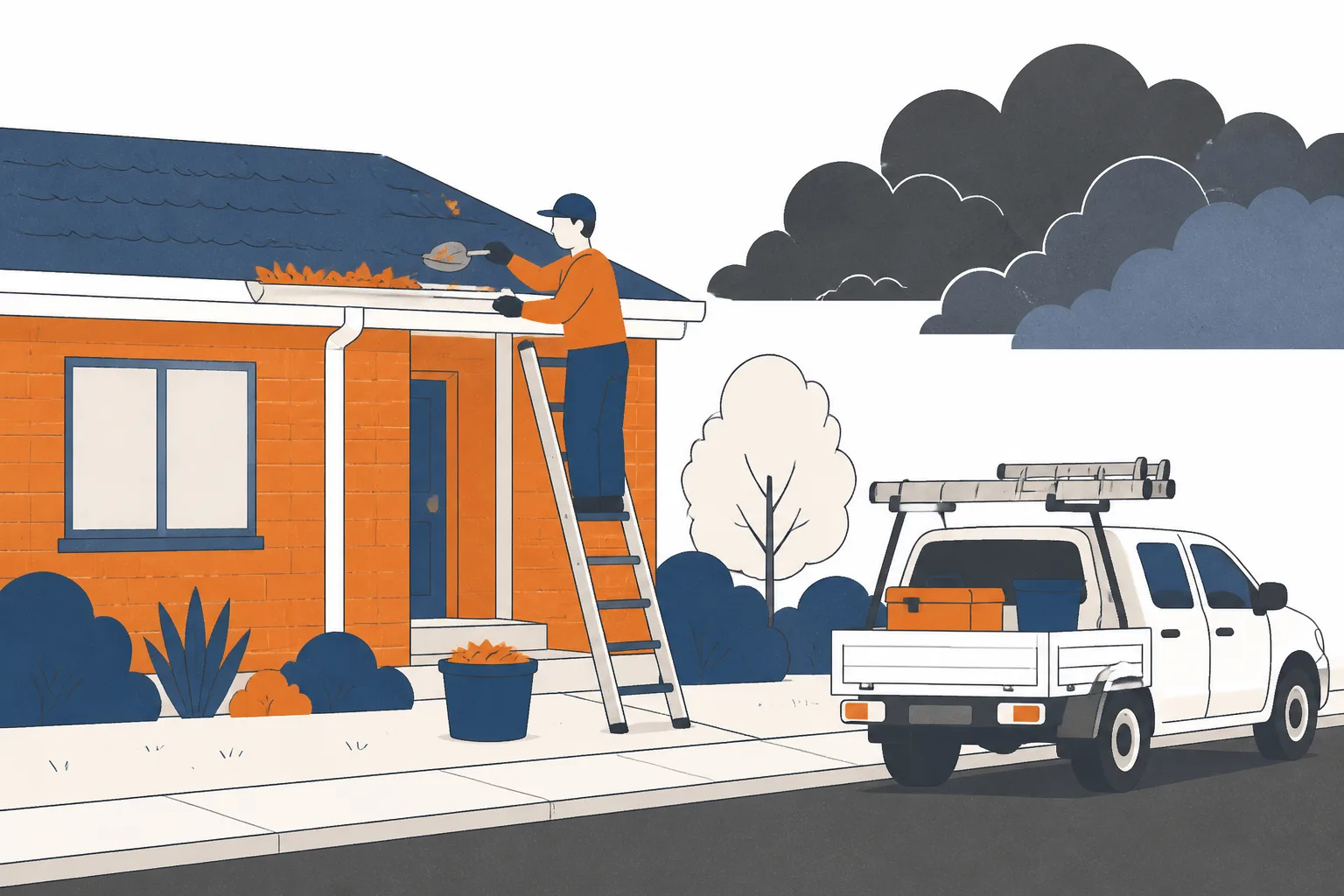
Triage suits work that cannot be priced or timed until somebody has seen it. Hot water gone overnight. A switchboard tripping every time the kettle goes on. A ceiling stain the morning after a storm. A roller door that will not lift with the car behind it. The customer does not know what the job is either — they know what has stopped working.
The specific reason a booking calendar is wrong for that work is that a slot is a promise about time, made before you know the job. Offer four two-hour slots on a Tuesday and the first burst flexi hose of the morning eats all four. Now you are ringing three people to move them, which is worse than never having offered a time at all.
There is a second reason, and it is about who gets the earliest appointment. On a calendar the first slot goes to whoever clicked first — usually somebody wanting a quote for an outdoor power point, not the family with a newborn and no hot water. Triage puts that decision back with you, which is where it belongs, and one look at the photo is usually enough to make it.
In practice the emergency customer will not fill in a calendar anyway. They ring. The form is for the ones who found you at eleven at night and did not want to wake you, so the job of the page is to make writing it down worth their while.
- A call-back window in words — 'before six today, or first thing if you send it after nine at night' — rather than 'we will be in touch'.
- Your real hours, including whether you answer at two in the morning and what that costs.
- Somewhere to attach a photo. One photo removes a phone call and often decides whether you want the job.
- The suburb, so you know before you ring whether it is a drive you would make.
- One line on what happens next, written as a sequence: you ring, you price it, then you come out.
Note. The call-back window is the field that changes the most. It is a promise you can keep, and it stops the customer ringing the next four numbers while they wait for you.

When a calendar earns its place
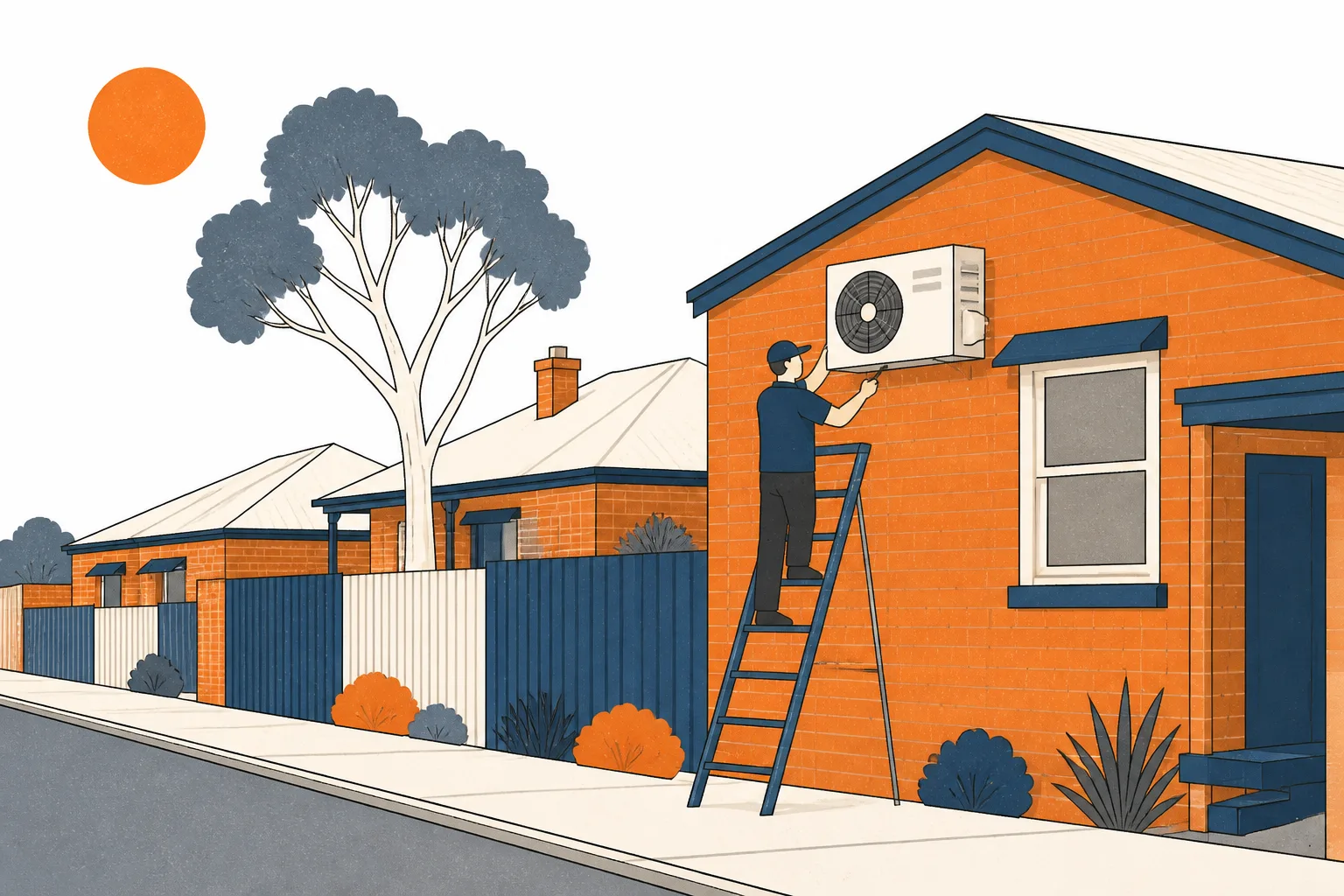
A calendar works when the unit of work is known before it starts: the same length every time, the same price every time, and little chance of it turning into a day and a half. A split-system service before summer. Gutters before storm season. A smoke alarm and safety switch check on a rental. A pool round. A log-book service by a mobile mechanic. Those are slots, and somebody will take one at ten at night rather than ring you at seven in the morning.
The move most tradies miss is that the thing worth putting on a calendar is often not the job. It is the quote. A measure-and-quote visit runs a fixed length, it is free or a known fee, and it is the appointment you most want people to take without a conversation first. Book the twenty minutes; price the work once you have seen it.
One warning about the word booking. A slot taken through a website form is a request until you say yes. Do not write copy claiming the appointment is confirmed, and do not let the page imply money has changed hands. Say what is true: they have asked for Thursday morning, you will come back to confirm it, and here is roughly how long that takes.
- Name the service the way a customer names it, with the length beside it — 'split-system service, 45 minutes'.
- Show a genuine next available date. A calendar with no dates on it is a contact form with extra steps.
- Say whether you come to them or they come to you, on every service. Half your visitors are wondering exactly that.
- Say what happens if they cancel, and by when, in one sentence.
- Keep the slots coarse. Morning and afternoon are easier to keep than 9:15.
Note. Dates that are wrong are worse than no dates. Decide what keeps the page honest — a real diary behind it, or you changing one line each Sunday night — before you put a calendar on the site.
Answer 'when' on the page, or they ring the next number
This is the whole argument, and it is why both shapes exist. Somebody ringing round does not stop at you. They send three messages or make three calls, and they go with whoever answers with a time. Somebody who has to wait for your reply to find out when you are free books somewhere else while they wait.
You know this from the other side of it. Someone messages at twenty to eight asking if you are free Thursday. You are on a roof. You reply at one, and they have already got someone in. Nothing about your work lost that job — the reply time did.
The page can answer 'when' without you. On a triage site it answers with a window: you will hear back before six, and this is the after-hours number. On a calendar site it answers with a date: the next free morning is Thursday. Both are answers. 'Contact us and we will get back to you as soon as possible' is not one — it reads as nobody being on the other end.
It is also the cheapest thing on the site to fix. One line of text and one number you can stand behind.
Note. If a visitor cannot tell how soon they will hear from you without messaging you first, the rest of the site is decoration.

What the form collects, and what to stop asking
Every field costs you leads. Somebody standing in a wet laundry with a phone in one hand will give you four things and give up on the seventh. So the fields have to be the ones that save you a phone call, not the ones that would look tidy in a spreadsheet.
A triage form needs five: what has gone wrong in their own words, a photo, the suburb, the best number, and when somebody is home. The full address can wait until you have said yes.
A booking form needs a different five: which service, which slot, the address, whether anyone needs to be there, and one line for anything you should know before you pull up. If you take a deposit, the page says so and says what it holds, before they pick a time rather than after.
Deposits and no-shows are the same problem in different clothes, and both are handled on the page rather than in software. A sentence saying a deposit holds the slot, or that a missed appointment inside twenty-four hours is charged at the call-out fee, does most of the work — because the person who was going to waste your morning reads it and does not book.
- 'How did you hear about us' — ask on the phone if you care.
- A dropdown of thirty services when you do four.
- A required company name on a form householders use.
- 'Preferred contact method', when you are going to ring them regardless.
- An email address as well as a mobile, when the reply is going to be a text.
Note. One field is worth more than the other four: the box that says tell me what has gone wrong. Leave it big, and do not turn it into a dropdown.
The Australian details that catch people out
Licensing here is state by state rather than national, and a website counts as advertising. Several states want your licence number on advertising, quotes and contracts, and a careful customer will look for it either way. Put it in the footer and on the service page it applies to, and check the wording with your own state's regulator rather than copying a site built in another state.
Prices shown to a householder are expected to be the total with GST included. Write the figure as what they will pay rather than adding 'plus GST' underneath it. Trade-to-trade pricing is a different conversation, and a page that mixes the two loses arguments at invoice time.
Customers here think in suburbs, not regions. 'Servicing all of Melbourne' tells somebody in Frankston nothing, and it loses you the people in Brunswick who assumed you were too far away. Name the suburbs you would drive to tomorrow, and say plainly where the travel charge starts.
Your year is not flat and the page should not pretend it is. Air-conditioning dies in the first fortnight of real heat. Roofs and gutters get attention before storm season, and before the wet up north. Hot water goes in the first cold snap. If one of those weeks is your busiest, the words people type in that week need to be on the site before the week arrives, not during it.
And it is read on a phone, outdoors, on patchy mobile data, one-handed. Your number has to be tappable at the top without scrolling, and the form has to still work with the keyboard covering half the screen.
- Licence or registration number in the footer, written exactly as the regulator has it.
- An ABN somewhere findable. Householders do check, and it costs you nothing.
- Prices as totals with GST in, never as a number plus GST.
- Suburbs written out, and the point at which travel starts costing.
- Public holidays differ by state, so if your after-hours rate changes on them, say which ones.
Getting it built, and who should not bother
Start with who should not do this. If your diary is already full and you turn work away most weeks, a booking page will only make the queue louder. Put your prices up first, and come back to this when that stops working.
For everyone else it is a description rather than a design job. Say what you do, which suburbs you cover, and which of the two shapes you need — 'breakdowns get a triage form, services get a calendar' is enough of a brief — and the pages come back written: headings, wording, the fields on the form. Then change what is wrong by saying what is wrong.
The free tier grants 3,000 credits a month, a full site generated and browser preview, which means the argument about which shape suits your work can be settled by looking at both instead of discussing it.
Every build turn is snapshotted before it runs, and reverting is itself revertible. That matters more than it sounds at nine at night: the way to find out whether the calendar reads better than the triage form is to try it, and the cost of a change you dislike is one click back.
Paid plans start at $20 a month in US dollars, or $16 a month paid yearly.
Note. The plans are priced in US dollars wherever you are, so US$20 a month is not the same figure in Australian dollars — your card converts it at whatever rate applies on the day.

Common questions
- I already use a booking app. Do I need a site as well?
- The app is where the diary lives. The site is where somebody who has never heard of you works out what you do, which suburbs you cover and what a job costs, and decides whether to take a slot at all. A bare booking link asks a stranger to commit before anyone has told them anything. Keep the app and put a page in front of it.
- My prices change with the job. How can I put them on the site?
- Show the shape of the price rather than a number for every job. A call-out fee, an hourly rate, a from-price on the two or three jobs you do most, and a plain sentence about what moves it — access, height, age of the fittings, whether a wall has to come off. That filters out the leads you did not want, and it reads as confidence. Somebody who cannot find any figure assumes the worst one.
- Will people take slots I cannot actually do?
- They will, if the page sells time you have not really got. Three fixes, in order: make the slots coarse enough to be true, set the first available date far enough out that you can meet it, and say in one line that a slot is a request until you confirm it. The third is the important one — it is honest, and it turns a mistake into a text message rather than a broken promise.
- I do not want customers seeing my whole diary.
- They should not. Show availability, not your week. A handful of dates, or morning and afternoon across the next few working days, is all the information the decision needs. More than that tells a stranger when your van is away from home, and tells the bloke down the road how busy you are.
- Can I take a deposit?
- The page can say you take one, what it holds and whether it comes off the final bill, and that is most of the value, because it is stated before the slot is picked rather than argued about afterwards. Taking the money is a separate job for a payment tool, and until it clears the slot is a request rather than a booking. Say which of the two you mean, on the page, in one sentence.
- What do I do about no-shows?
- Write the rule down and put it where the slot is picked. A line saying a missed appointment, or a cancellation inside twenty-four hours, is charged at the call-out fee does more than chasing ever will — the person who was going to waste your morning reads it and does not book. Then send a reminder the day before, because most no-shows are forgetfulness rather than rudeness.