For electricians · 9 min read
Websites for electricians: what to put on them
Scheme registration, EICRs and landlord work, domestic against commercial, and EV chargers — the pages an electrician's site actually needs.
What someone checks before they ring an electrician
Electrical work is one of the few trades where the customer knows there are rules, even if they could not name one. They know a bad job can burn the house down. They know there is meant to be a certificate at the end. Somebody — an estate agent, a mortgage surveyor, their dad — has told them to check the electrician is registered.
So a visitor to your site is doing two jobs at once. The first is the same as for any trade: do you do this particular thing, and do you cover where I live. The second is specific to you. They are looking for the registration, without being entirely sure what they are looking for.
That makes the scheme name and your registration number part of the answer, not part of the footer. Written out in text, near the top, on the phone screen, before any scrolling happens.
- The specific job — "EICR for landlords", "consumer unit replacement" — not "all aspects of electrical work".
- The towns you cover, written out one by one.
- Your scheme and your registration number, as text, so it can be copied and checked.
- A phone number that dials when tapped, with your hours beside it.

Registration, Part P, and how to explain them
NICEIC, NAPIT, STROMA, BESCA — the scheme names mean a great deal to you and almost nothing to a homeowner. What they mean in practice is that you are on a competent person scheme, and can self-certify notifiable work under Part P of the Building Regulations rather than the customer paying building control to come and look at it. Name the scheme you are actually on. Schemes merge and get renamed, and a site naming one that closed years ago is exactly the detail a careful customer catches.
Almost no customer knows that. Which is why the logo on its own is a wasted opportunity, and a sentence beside it is not. Something like: we are NAPIT registered, so when we change your consumer unit we notify your council's building control ourselves and post you the certificate. You do not have to arrange anything, and you do not pay a separate fee.
Part P covers England and Wales. Scotland works to its own building standards and Northern Ireland to its own regulations, so if you work either side of a border, say which rules you are working to. It is a small line that stops a certain kind of awkward phone call.
The same page should carry your public liability cover with the figure on it, and say whether you do the work yourself or send someone. Customers who have been let down once always ask. Answer it before they do.
- Scheme name and registration number, in text rather than baked into an image.
- One sentence on what registration means for the customer, not for you.
- Public liability cover, with the amount.
- Whether you carry out the work yourself or use subcontractors.
- The paperwork they end up with, named properly: EIC, minor works certificate, EICR.

EICRs and landlord certificates
Since 2020, landlords letting privately in England have had to have the electrical installation inspected and tested at least every five years and hand the report to their tenants. Wales and Scotland have their own arrangements to much the same effect. For an electrician, that is the most predictable work there is, and people search for it by its proper name.
It deserves a page of its own, not a bullet point on a services list. Landlords and letting agents buy this repeatedly and compare on two things: price and how fast the report lands in their inbox. Answer both in the first paragraph. Then say what happens if the report comes back unsatisfactory — whether you quote for the remedials, how the pricing works, and how quickly you can get back.
It also pays to explain the codes, because plenty of landlords arrive at your site holding a report from someone else and no idea what it means. C1 is danger present. C2 is potentially dangerous. Both make a report unsatisfactory, as does FI, further investigation required. C3 is a recommendation, not a failure. A page that explains that plainly gets found, read and rung.
| Property | Typical EICR range | What moves the price |
|---|---|---|
| 1–2 bed flat | £120 – £180 | Circuit count, access to the board |
| 3 bed house | £150 – £250 | Age of the wiring, number of accessories |
| 4–5 bed house | £200 – £350 | More circuits, outbuildings, EV point |
| Small commercial unit | £250 – £500+ | Three-phase supply, out-of-hours access |
Note. Those are ranges you will see quoted around the country, not a recommendation. Publish your own numbers with a date next to them. A landlord phoning round collects four prices in ten minutes, and the page that answered before the call has half the job already.

Domestic and commercial want different pages
Most electricians do both, in some uneven mix. The trouble is that the two customers read in completely different ways, and a site that blends them ends up persuading neither.
A homeowner wants reassurance and a number. A facilities manager wants to know you can be on site at six in the morning, that your insurance limits clear their threshold, that you will produce the paperwork their auditor asks for, and that you will invoice on terms rather than asking for cash on the day. Write one page in the voice of the other and you lose the reader in a paragraph.
Keep them on the same site, but give commercial its own route in, its own page and its own kind of proof. Named sectors carry more weight than adjectives. So does a plain sentence about how many engineers you can put on a site at once, and the largest job you have completed.
- Sectors you have actually worked in — retail units, schools, care homes, licensed trade.
- Whether you work nights, weekends and planned shutdowns.
- Insurance limits, and any accreditations you hold — CHAS, SafeContractor, Constructionline.
- Emergency lighting and fire alarm testing, if you do it. That is a contract, not a one-off.
- Payment terms, and who they raise the purchase order with.
EV chargers, and being found for them
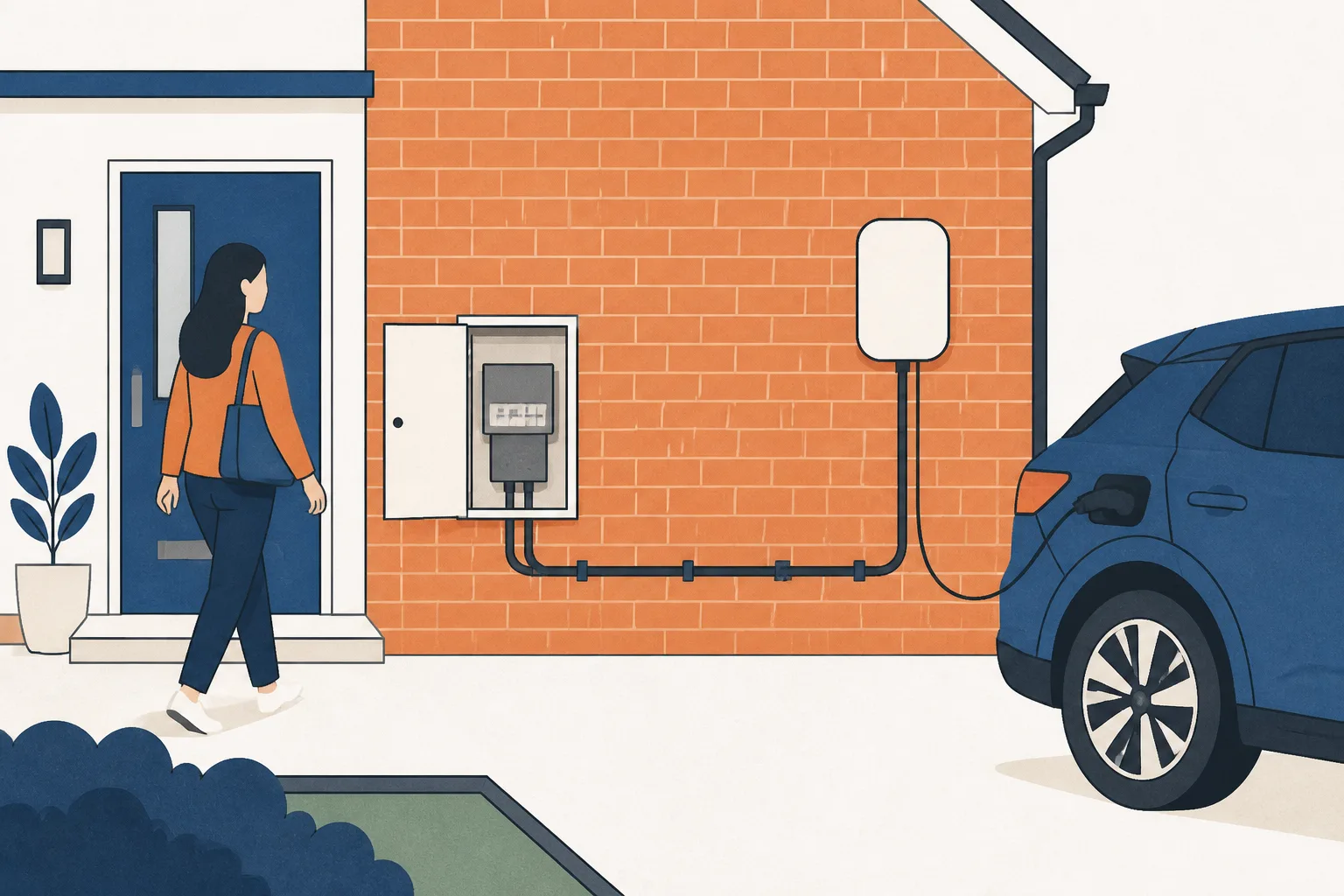
EV charge point work is the service where the customer usually turns up early. They are researching before the car arrives, which means they land on your page with real questions and time to read the answers. Will my supply take it. Tethered or untethered. Do I need the board doing first. How long are you in my house for.
The installation falls under Section 722 of BS 7671, needs protection against an open PEN conductor on a TN-C-S supply, and goes to the distribution network operator as well as through your scheme. New home and workplace points have had to be smart chargers since 2022. The customer needs none of that in those words. What they need is one line saying you handle the notification, the earthing and the certificate. That line does the work. Grant funding still exists in some situations, mainly flats and rental properties, with a separate scheme for workplaces, and usually needs an installer authorised for it. If you are, say so plainly and link to the government guidance rather than restating amounts yourself.
A straightforward single 7kW home installation, unit included, tends to sit somewhere in the £800 to £1,200 range, and climbs from there if the consumer unit needs replacing, the cable run is long, or the meter position is awkward. Publishing that range along with the things that push it up removes a whole category of phone call you were never going to win.
The page that gets the lead is usually the dullest one: a survey, half a day's work, the certificate, and someone showing them how to set the app up before leaving. Say that, in that order.
Note. Grant schemes and their eligibility rules change. Put a review date on any page that mentions one, and point at gov.uk rather than copying the figures across. A page quoting a grant that closed last year does more damage than having no page.
The pages worth building, and the proof that goes on them
One page per named service beats one long services page, for a mundane reason. Someone searching for an EICR in Bolton and someone searching for outdoor sockets in Bolton need different answers, and a single page can only be the best answer to one of them.
Six or seven pages covers most electricians. Build them around the jobs you want more of rather than everything you are capable of, because the site will bring you more of whatever it describes best.
- EICRs and landlord certificates — price, turnaround, what the codes mean.
- Consumer unit replacement — the most searched upgrade there is, with a range.
- EV charger installation.
- Rewires — priced per bedroom, because that is how people ask for it.
- Faults and callouts — your hours, and what you charge to attend.
- Commercial, if you want more of it.
- Areas covered, with the towns spelled out.
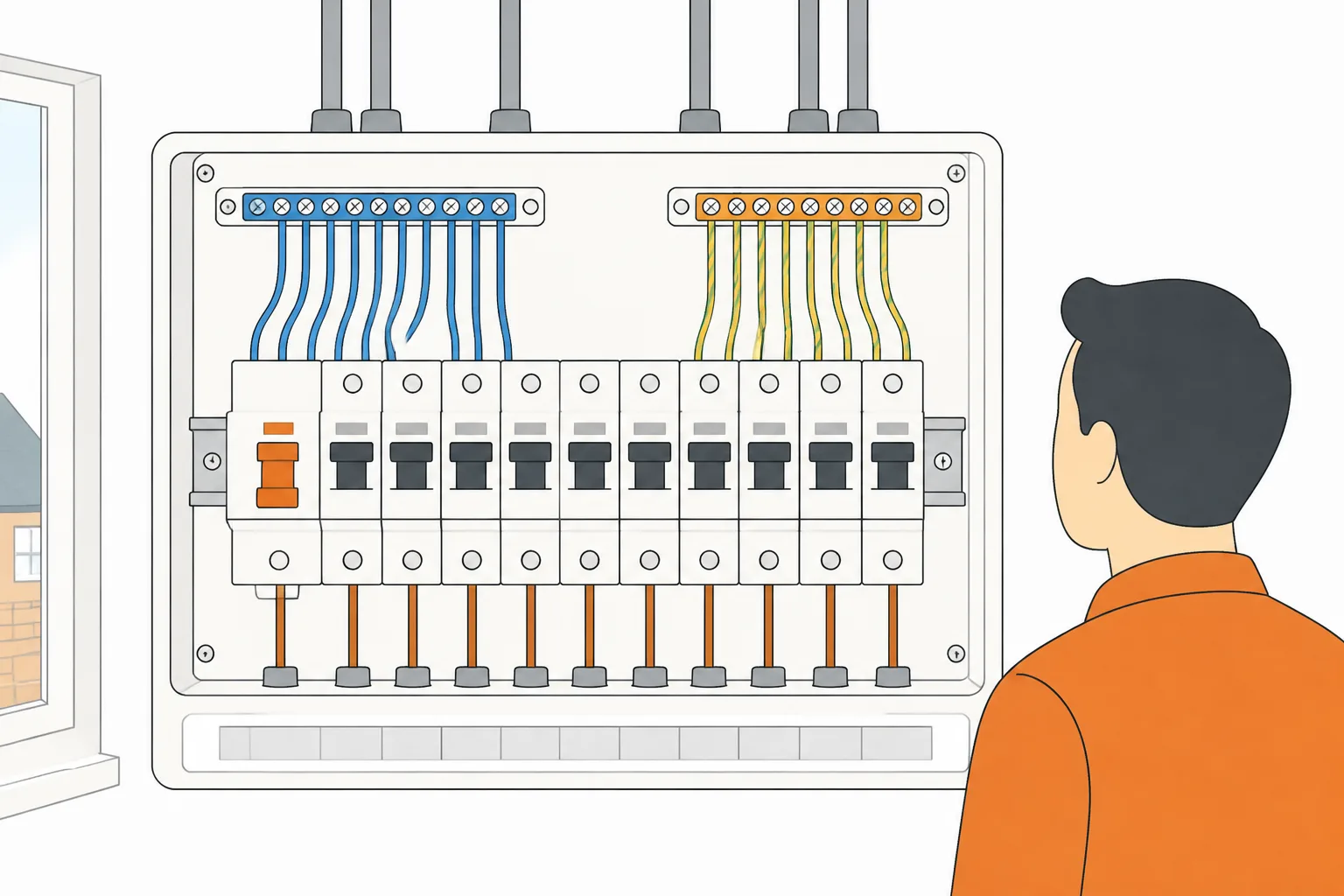
Note. Take the photograph before you pack the tools away. A tidy board with the ways labelled, shot straight on in daylight, is the single most persuasive image an electrician can put on a website.
Common questions
- Do I have to put my NICEIC or NAPIT number on the site?
- Nothing obliges you to, but there is no good reason not to. The number can be checked on the scheme's public register, and a number that checks out is worth more than a logo, which anyone can copy off Google Images.
- Should I publish EICR prices?
- Yes, as a range with the things that change it. Landlords ring three or four electricians and go with the first clear answer. If your page answers before the call, you often skip the ringing round entirely.
- Do I need a separate page for every town I cover?
- Only for the towns you genuinely work in and want more of. Two or three real pages, with local jobs and photos on them, do more than fifteen pages with the town name swapped out.
- I mostly do commercial. Is a site worth the bother?
- Yes, but for a different reason. Commercial buyers check you exist and check your insurance before they ring, often while adding you to an approved list. The site is what gets you through that check.
- All my work comes from word of mouth. Why change?
- Word of mouth almost always ends at a search. Someone is given your name, types it into their phone at the kitchen table, and decides from whatever comes up. A site is how you control what that is.