Lesson 1 of 5 · Build apps with AI · 8 min read
How to build an app with AI
Build a useful AI web app from one clear job. Follow the Grafter workflow from first prompt to phone testing, revisions and a proven result.
Visual guide. The walkthrough shows a current Grafter editor state with a dog-walking brief, saved build, 375-pixel preview, hero-only revision, validation message and booking confirmation. It does not reuse promotional footage.
Read the video transcript
Start with one job: a dog-walking owner needs bookings and a clear phone journey, not ten unfinished features.
Write the complete first brief in Grafter, naming the customer, screens, saved details, rules and successful ending.
Grafter opens the working preview beside the chat, where the app can be checked at a real phone width.
Ask for one bounded revision: keep the booking flow and bring the prices closer to the top.
Finish by completing the journey yourself, including an empty field and the final confirmation.
🧭 The short answer: build one complete journey
Yes—you can build a working web app with AI without beginning in a blank code editor. The dependable way is to give the builder one recognisable person, one job and one finish line, then test that journey before adding another feature.
A dog-walking app is not ‘bookings, CRM, subscriptions, messages, analytics and an owner dashboard’. Its first useful version is simpler: a customer chooses a walk, gives the details the walker needs and sees a confirmation. When that path works on a phone, you have an app. Everything else is the next decision.
What you need before you open Grafter
- A person
- The first person who will use the app—not ‘everyone’.
- A job
- The action they came to complete in one sitting.
- A finish
- The screen, saved record or confirmation that proves it worked.
- Real rules
- Prices, opening times, required details and anything you must not invent.
- About 30 minutes
- Enough for a focused first build and a careful phone test; complex connections take longer.

1. Map the journey on one scrappy line
Before you describe colours or cards, write the successful journey as a chain of verbs. For the dog-walking example: choose a service → choose a time → add dog details → review → confirm. If you cannot fit the central path on one line, the first version is probably trying to solve two jobs at once.
Now add the uncomfortable branches beside that line. What if no time is available? What if the phone number is missing? What if the customer presses the final button twice? These are not polish. They decide whether the app behaves like a tool or a drawing of one.
- Name the first person in ordinary words: customer, dispatcher, coach or volunteer.
- Write the action they take on each screen, from arrival to a visible finish.
- Circle the information that must be saved, calculated or shown again later.
- Add the two mistakes most likely to happen in real use.
- Move every idea that is not needed for this journey into a ‘later’ list.
Note. A feature belongs in version one only when removing it prevents the central person from reaching the finish line.

2. Give Grafter a brief with decisions in it ✍️
Open Grafter, choose a new project and describe the first version in plain English. Name the person, the screens, the information, the rules and the successful ending. You do not need to dictate every margin. You do need to supply facts the builder cannot safely guess.
The prompt below is deliberately specific without turning into a technical specification. Replace the business facts, but keep the shape: person, job, path, rules, finish and the things to leave out.
Tip. If the builder would need to invent a price, policy or promise to finish the screen, put the real fact in the prompt now.

3. Read the preview like a customer, not its author
When the first build opens, resist the urge to admire the whole thing from the top. Complete the journey. Use the controls in Preview, enter believable fictional details and reach the promised finish. A beautiful first screen does not compensate for a form that cannot be submitted.
Switch to the phone frame before making style requests. Read the longest service name, open every menu and keep an eye on the bottom edge when the keyboard would be visible. The phone view is where crowded headings, tiny targets and fixed buttons usually reveal themselves.
- There is one obvious next action on every screen.
- The back action keeps work already entered where that is expected.
- Required fields are marked before the final press, not only afterwards.
- The final state repeats what was chosen and says what happens next.
- Nothing claims an email, payment or saved record exists unless the connection really exists.
4. Change one bounded thing at a time
A revision should name the target, the problem, the correction and what must stay. ‘Make it better’ asks the agent to reopen every decision. ‘On the Home screen, replace the large photo but keep the heading, booking button, colours and every other screen unchanged’ gives it a fence.
After a material change, reread the changed screen and replay the central journey. Small requests can still touch shared navigation or data, so the check is part of the revision rather than something saved for launch day.
Note. If you can point to the broken place, point to it. ‘The service cards on the Choose a walk screen’ is safer than ‘the design’. Keep the rest explicitly.
5. Connect data and payments after the path makes sense
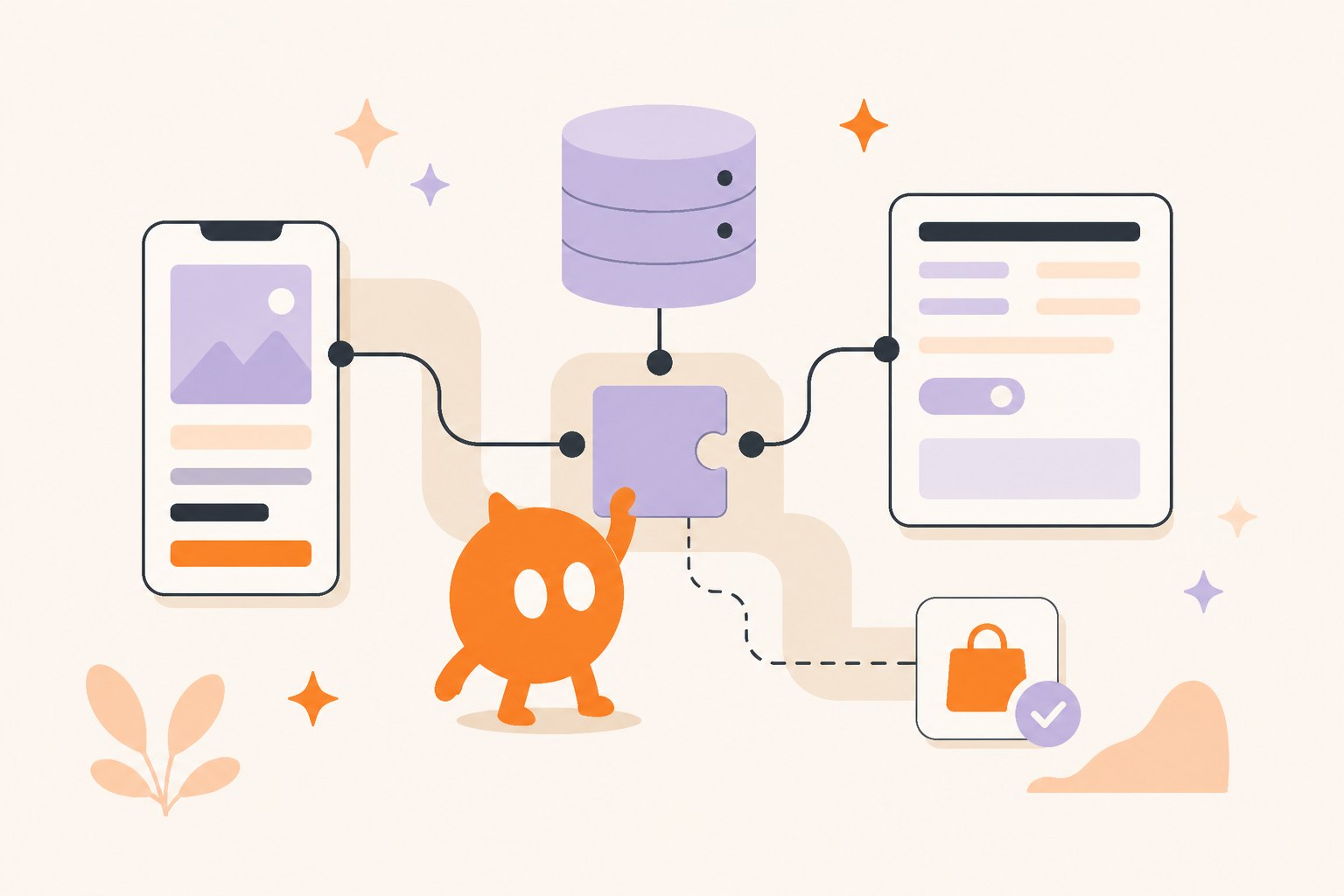
Accounts, saved records, payments and messages turn a convincing preview into a system people can rely on. They also introduce ownership, security and failure states. Connect them after the screen journey is settled, so you are not debugging a provider while still deciding what the customer is buying.
In Grafter, open the relevant dashboard area before asking the editor to use it. Connect Payments before requesting a real checkout. Define the product and its price on the server side rather than letting browser code decide the amount. Use fictional or provider-supplied test details until the success, cancellation and failure paths agree.
| If the app needs… | Prove this before launch |
|---|---|
| Saved records | Reload, sign back in and confirm the same person sees the right record. |
| Two roles | Use two accounts and prove each role cannot open the other's private data. |
| Payments | Complete, cancel and fail a test checkout; verify the provider and the app agree. |
| Email or messages | Send to a safe test address and confirm delivery, content and duplicate protection. |
| Uploads | Try a valid file, a wrong type, an oversized file and a refresh after upload. |
6. Prove the result before calling it done 🧪
Run the happy path once, then make it awkward. Leave fields empty. Enter the longest believable text. Reload halfway through. Press the final action twice. Open the app on a narrow phone and a wide desktop. Each test should have an expected result written before you press anything, or it is too easy to accept whatever happens.
Keep the result as a short release note: what was tested, what passed, what remains unavailable and which version was used. That little receipt is how you avoid retesting the wrong preview two days later.
Tip. Do not use real customer details or a live card while you are finding faults. Test data should be safe to lose, repeat and screenshot.
Web app or native app? Make this decision late
Most portals, booking tools, trackers, calculators and dashboards are strong web-app jobs. They open from a link, work on phones and computers, and can be updated without asking everybody to install a new version.
Choose native iOS or Android when the central job depends on deep device features, dependable offline work, background behaviour or an app-store requirement. Do not choose it because the idea uses the word app. Build and prove the smallest journey first; then the missing capability will tell you whether a native package is worth the extra work.
Common questions
- Can AI build a complete app?
- AI can create a useful working web-app draft, screens and interactions from a clear brief. Accounts, permissions, payments and other connections still need their real setup and deliberate tests before anybody should rely on them.
- Do I need to know how to code?
- No. Start with the person, job, rules and finish line in plain language. You still need to make business decisions, test the result and know which connected services are real rather than visual placeholders.
- How long does an AI app take to build?
- A focused first journey can be drafted quickly. The honest clock is the time needed to test data, roles, payments and awkward paths. A ten-screen interface can appear before one important checkout or permission rule is trustworthy.
- What should I build first?
- Build the smallest journey that lets one recognisable person reach a valuable ending. For a booking app, that is usually choosing, entering details and receiving a confirmation—not reporting, subscriptions and staff analytics.