When the designer has gone · 15 min read
My web designer has disappeared
The designer has stopped replying, or is holding your site. What to fight for, what to walk away from, and how to get trading again on your own name.
What you have actually lost, and what you have not
There are two versions of this and they end in the same place. In the first the person has genuinely gone: emails bounce, the mobile rings out, the company shows as dissolved. In the second they are still there and will not do it — the reply comes in a fortnight, the login never arrives, and a bill for changing your opening hours turns up before the change does. Nothing after this paragraph depends on which one you are in, because the things you need back are the same either way, and none of them is the website.
Start with the honest part, because it decides how fast you move. If the site is still up, still correct and still collecting messages, you are not in an emergency. You are in a slow problem that becomes one on a date you do not currently know: the day the domain comes up for renewal against a card that stopped working two years ago. Finding that date is this week's job.
Three things decide whether you keep your customers. The name people type, the listing they tap on a phone, and the number they ring. All three live somewhere other than the website, and all three can be recovered without a single file of the old build. The site itself is the part you can replace in an afternoon, and this page is going to tell you to.
Note. A website will sit online quite happily for months with nobody minding it. A name that lapses takes the site and the email with it on the same morning, and there is no warning phone call.

Find out who holds what, before you write to anybody
Most people in this position do not yet know what they are asking for, and it shows in the first email they send. Half an hour of looking turns that into a list of named items held at named companies, and a list gets answered when a plea does not.
The public record tells you who the world believes owns the name. Your own bank tells you what you have been paying for, which is often the more revealing of the two, because it is where the second hosting account and the annual renewal you had forgotten about show up. Anything you paid for directly is something you hold a receipt for, and a receipt with an account reference on it is worth more than any conversation you are about to have.
For the public record, look the domain up on any free registration lookup. On a .uk name you may see the registrant and you may see nothing — Nominet lets a private individual keep their address off the public record, but that opt-out is for people who are not trading, so a business usually shows. What always shows is the registrar: the company where the entry is held. That company is who you will end up dealing with, not your designer.
- Look the domain up on a public registration lookup, and write down the registrar and the expiry date.
- Search your own email for that registrar's name. Renewal notices go to whichever address is on the account.
- Mark every unexplained recurring payment in eighteen months of bank and card statements.
- Sign in to Google with every address the business has ever used, and see whether the Business Profile is sitting in one of them.
- Ring your own advertised number from somebody else's phone, and listen to what happens before it rings.
Note. If the renewal notices go to your designer's address, that is not proof they own the name. The registrant and the contact address are two different fields on the same entry, and it is common for the first to say your business and the second to say theirs. Ask the registrar which is which before you assume the worst.

The one email worth sending
Send a short one. A long email describing how let down you feel gets read once and put aside, and it is also the first document anybody reads if this ever goes further than email. A list of named items with a date on it gets answered, because it is easy to answer.
Ask for control of things rather than copies of things. Please send me my files is a request somebody can satisfy badly and consider closed. Please transfer the registrant on this name, at this registrar, to this company has exactly one correct outcome. Give a date, and say what you will do afterwards — which is not a threat when the thing you will do is go to the registrar and to Google directly.
- Registrant control of the domain, named exactly, at the registrar it is actually held at.
- Ownership of the Google Business Profile, moved to a Google account you name in the email.
- Who the advertised phone number is registered with, if it is not registered to you.
- Where the contact form sends its messages, and any that are sitting unread.
- Anything of yours held nowhere else: original photographs, words you wrote, customer records.
Note. Do not ask for the site login in the same breath as the domain. Bundling the item that matters with three that do not gives a reluctant person a way to answer half of it and treat the matter as settled.

The domain is the one to fight for
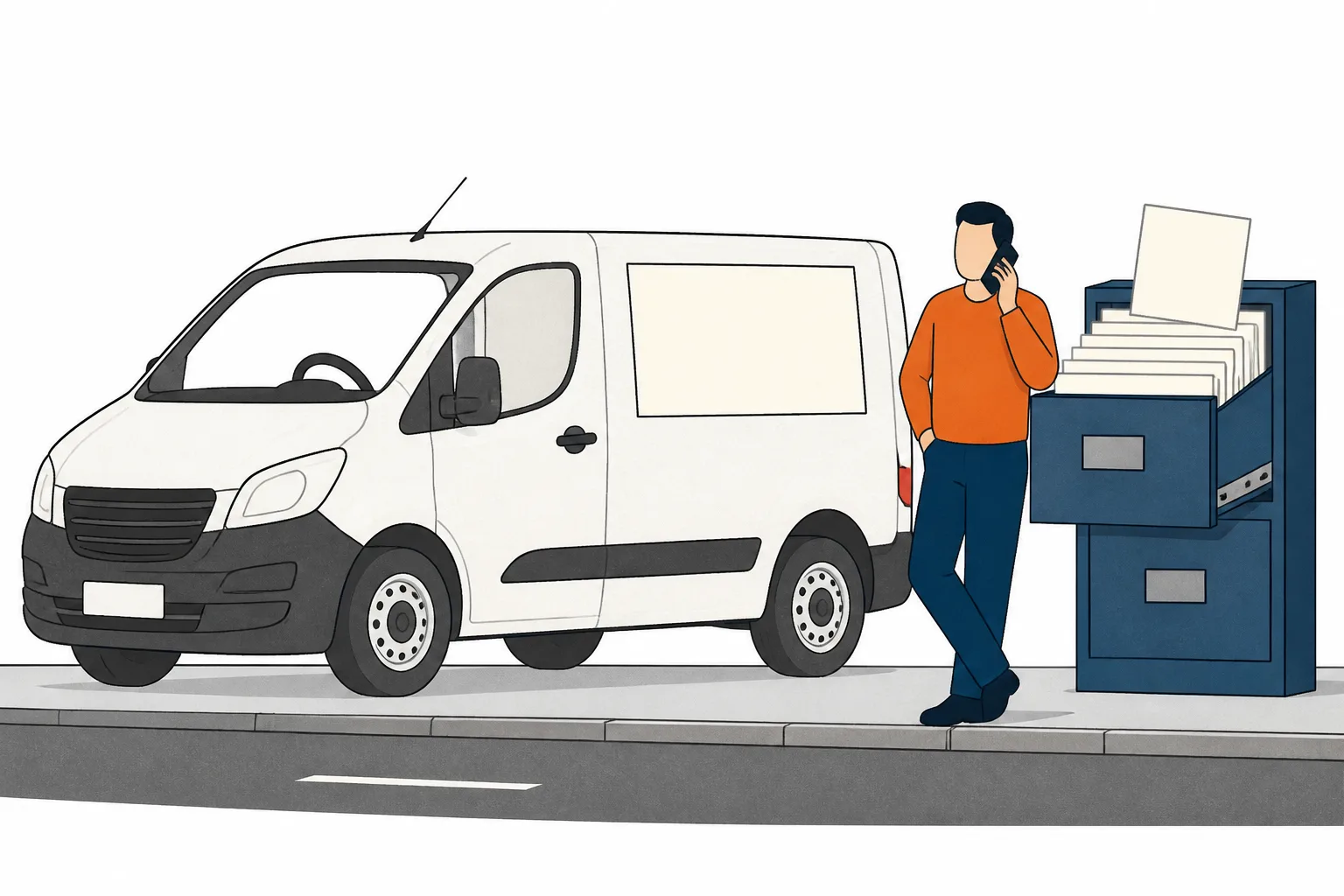
Everything else on this page can be replaced. The name cannot, because it is on the van, on the invoices, in a review somebody left three years ago, and in the memory of every customer who wrote it on the back of a receipt.
Your designer is not the authority here. The registry keeps a register, the registrar holds the entry on it, and whoever the entry names is the holder. Which is why the useful phone call is to the registrar rather than to the person who has stopped replying: you are asking a company that answers its phone about a record it administers.
For a .uk name that registry is Nominet, and there is a published route for changing who the entry names, with a published fee. Nominet's own page refused the request when this was checked, so the figures here come from several UK registrars repeating the registry's fee in their own help pages, read in August 2026: £10 plus VAT to change the registrant's name, £20 plus VAT where the type of registrant changes as well — a sole trader becoming a limited company, say — and £35 plus VAT in the cases needing extra verification. That is the registry's charge for the change itself and not a quote for anybody's time. Whether your registrar adds a handling fee of its own is a question to ask them before you start.
Other endings work differently. A .com moves between registrars using an authorisation code only the current account holder can produce, so if the account is not yours you are not moving it alone. What you can often do instead, once the registrar accepts that the entry names your business, is have the records changed so the name answers with a new site. That is a smaller ask than a transfer, and it is the step that actually gets you trading.
If they refuse outright, stop. A refused registrant change is a dispute, there are formal routes for one, and which applies to your name is a question for somebody who does this for a living. Nothing here is legal advice, and a website builder is the wrong place to get any.
Five words people mix up, and only one decides ownership
- Registrant
- Who the name belongs to. This is the one that matters
- Admin contact
- Who gets the renewal notices. Often the designer
- Registrar
- The company holding the entry, and the number you ring
- Name servers
- Where the name looks up its records. Changed, not owned
- Host
- Where the files sit. Nothing to do with owning the name
The listing and the number matter more than the site
For most trades the Google Business Profile brings in more calls than the website does. So if yours was set up inside the designer's own Google account, that is the second thing to recover, and on a bad week it is the first.
Google has its own process for this and it does not require your designer to agree to anything. You ask for ownership of a listing you can see, Google contacts whoever currently holds it, and if nobody answers inside the window they allow, the claim can pass to you. Whatever the temptation, do not open a second listing while that is running: two listings competing for one business weakens both and makes recovering the first harder. There is a fuller account of how the profile works elsewhere on this site.
Then the number. If the number on your van, your leaflets and your listing was bought for you by a designer or a marketing firm, it is theirs, and it stops the day their account does. Ring your own advertised number from somebody else's phone and listen to the first two seconds: a pause, a click, or a recording about calls being recorded means you are going through a system belonging to somebody else. The fix is neither clever nor quick. Get your own number onto the listing, the site and the next print run, run both for as long as the old one keeps working, and treat every job arriving on it as borrowed time.
The same question applies to email. If you use an address on the domain, your mail is routed by records attached to that name, so whoever controls the records controls where it is delivered. Another reason to settle the domain before anything else, and the one item here where a delay costs you messages you will never know you missed.
What to abandon, and why nobody else will tell you to
Here is the part the other pages answering this question cannot say, and it is not because they are dishonest. They are web agencies, and the page you are reading on their site exists because a rescue is a chargeable project. Abandoning the old build is not.
So: the hosting account, the WordPress install, the theme licence, the plugins, the page builder the theme depended on, the design files. Let all of it go. Recovering a build you cannot log into means paying somebody to work backwards from a public web page, in a stack they did not choose, to reconstruct a site you were already unhappy enough with to be reading this. After several weeks you have the same site with the same problems, and a new person you depend on to change a phone number.
The cost people miss is the calendar rather than the invoice. Building a site is now the cheapest and fastest part of getting back on your feet. The domain, the listing and the number are the parts that take weeks, and they take those weeks whichever way you go. Three of them spent on the old files buys nothing you could not have by Friday.
One honest exception, worth taking seriously. If the site holds something that exists nowhere else — a decade of writing, a photo library whose originals are gone, orders and customer accounts on a shop — then the content is worth recovering even though the build is not. That is a different job from a rescue, and it is the one below.
| What it is | Fight for it, or let it go | Why |
|---|---|---|
| The domain name | Fight, first, before anything else | It is on the van and in every customer's memory. Nothing replaces it |
| The Google Business Profile | Fight, through Google rather than the designer | For most trades it brings in more calls than the website ever did |
| A tracking phone number | Find out, then replace it in your own name | It stops working the day somebody else's account stops |
| The hosting account | Let it go | You are renting somewhere to put files you are about to replace |
| The old build, its theme and plugins | Let it go | Reconstructing it costs weeks and ends with the site you already had |
| Words and photographs held nowhere else | Save these rather than the build | The only part of a website that took real time to make |

Getting your words and photographs back with no access at all
You do not need a login to take your own content off a site that is still online. Open every page, copy the words into a document, and save each picture straight out of the browser. It is a dull hour and it is the whole job.
If the site has already gone, the Internet Archive at archive.org has probably been keeping copies for years, and they usually include the pages and often the pictures. Then remember where the photographs came from in the first place: almost every picture on a trade website was taken on the owner's phone, so the originals are in your own camera roll at a better size than the site ever used.
Note. Orders and customer records are the one case where none of this helps and where getting into the old system genuinely matters. If that is your situation, this page stops being the right one — it is the data you need somebody to recover, not the design.
Ending with a working site rather than with a quote
The order that gets you trading soonest is not the one that feels right. It feels right to recover the old site first and sort the paperwork afterwards. It works better the other way round: put a plain new site together this week, so that the moment the name is yours there is somewhere to point it, and the recovery becomes the only thing you are waiting on.
A first site for a trade business is five pages and one afternoon. What you do, where you do it, proof that it happened, how to reach you, and either your prices or a straight explanation of why you do not publish them. It does not have to be the site you keep for five years. It has to be better than a name pointing at nothing.
That is what this product does, said once so you can weigh it: you describe the business, a site is built from the description, and the first build is free, once. Putting it on a domain of your own needs a paid plan, and the cheapest is $20 a month. The domain work still happens at your registrar and at the hosting account, because there is no domain screen in here and there never has been — there is a separate guide on this site to that whole route.
And the version where you should not buy anything from us, which is the more common one. If the site is still up, still correct and still collecting messages, and the only thing that has gone is the person, you do not need a new website. You need the registrar login, the Google account, and somebody's number for the day the prices change. Get those three, leave the site alone, and spend the money on photographs instead.
Note. Point the recovered name at something the same day it becomes yours. A domain answering with a registrar's holding page reads as a business that has closed, and it reads that way to precisely the people who were about to ring you.
The four accounts that stop this happening twice
Whoever builds the next one — a person, a product, your nephew — the arrangement is four accounts in your name with your card on them. This is not about trust. Honest people fall ill, emigrate, retire and stop answering their phones, and this arrangement survives all of it without anybody behaving badly.
One question is worth asking before you hire anybody: if you disappeared tomorrow, what would I be unable to do. A good answer is a short specific list. A bad answer is a long reassurance about how it is all taken care of, and you have just read a page about what that becomes. The same list from the other side, for people who build sites for a living, is elsewhere on this site.
- The registrar account, with your business as the registered holder and your own email on it, auto-renew on and the card current.
- The Google Business Profile, owned by a Google account you can sign into, with anybody else added as a manager rather than an owner.
- The hosting or deploy account, in your name and on your card, whoever it is that pushes the changes.
- Where the contact form sends, written down somewhere other than in the builder's head, and proved by sending a real message through it.
Common questions
- They have gone quiet but the site still works. Do I have to do anything?
- One thing this week: find the domain renewal date and make sure the card paying it is yours and current. The rest can wait. A site with nobody minding it runs perfectly well right up until the name lapses, and then the website and the email stop on the same morning.
- Can they hold my domain over an unpaid invoice?
- Money owed and the register are separate matters, and how they interact depends on what you agreed and on the registrar's own rules, which makes it a question for somebody qualified rather than for us. What is useful to know is that the registrar administers the entry, not the designer, so the conversation that resolves it usually starts there.
- Is it worth paying an agency to recover the old site?
- Rarely. You are paying for weeks of work to reconstruct a site you were already unhappy with, and at the end you still have to sort the domain and the listing, which is the slow part either way. The exception is content held nowhere else: years of writing, a photo library, or orders and customer records on a shop.
- The site is gone and the domain has expired. What now?
- Ring the registrar that day and ask where the name sits in the sequence, because expired is not the same as gone — names are held in a suspended state for a period before anybody else can register them. If it has genuinely been taken by somebody else this becomes a different and much worse problem, which is why the renewal date is the first thing on this page.
- Should I take a new domain and forget the old one?
- Only if the old one was never really used: no signage, no vehicle livery, no print, no reviews pointing at it. If it is on a van you are still driving, abandoning it costs you every customer who types the old address for the next five years, which is a far bigger number than the registry's fee for changing who the name belongs to.
- What happens to the reviews on the listing I cannot get into?
- They belong to the listing rather than to you, which is the whole reason claiming the existing profile beats starting a clean one. A new listing begins at nothing while the years of reviews go on sitting on the old one, and nobody selling you a service can move them across.