Comparison · 9 min read
Do I need a website if I have Facebook?
An honest answer, including the cases where it is no. Reach, ownership, search, credibility, and the things a website cannot do for you.
The honest answer
For some businesses, no. If your work comes out of the village Facebook group, your diary is full six weeks ahead, and you have never once lost a job because somebody could not find you, a website will not change much. It will be a thing you paid for.
For most, the answer is yes, but not for the reason it usually gets sold. A website is not a smarter Facebook page. It does a different job. Facebook reaches people who already follow you, or who saw a neighbour tag you in a thread. A website catches the person whose tank has just gone and who typed the problem into their phone. Two different people, at two different moments. Only one of them is scrolling.
So the useful question is not whether you need a website. It is whether you are losing work you never hear about. Nobody rings to say they went with someone else because your page had not been posted on since March, or because they could not tell whether you covered their town. That loss is silent, which is exactly why it goes on for years.
Note. If you cannot name one job you lost for a reason a website would have fixed, you probably do not need one this month. Ask again when the diary starts looking thin.

When a Facebook page really is enough
There are honest cases where a website adds nothing, and naming them is more use than pretending every business needs one. Most of them share a shape: the work is already arriving through people, and the thing holding you back is your own time rather than your visibility.
A website does not solve a capacity problem. If you are turning jobs down, more leads make your week worse, not better. The money is better spent on a second van, an apprentice, or somebody to answer the phone while you are under a sink.
- You are booked out months ahead and already saying no to work.
- Nearly all of your jobs come from one source — a builder who subcontracts to you, a letting agent, an insurance panel.
- You are winding down towards retirement and want the last few years kept simple.
- You work one small town where everybody genuinely does know everybody, and the local group does the job.
- You know you would never update it. A site showing last year's prices and an old mobile number is worse than no site.

Reach, and who owns the audience
Two things about a Facebook page are worth understanding plainly, because both usually get explained badly.
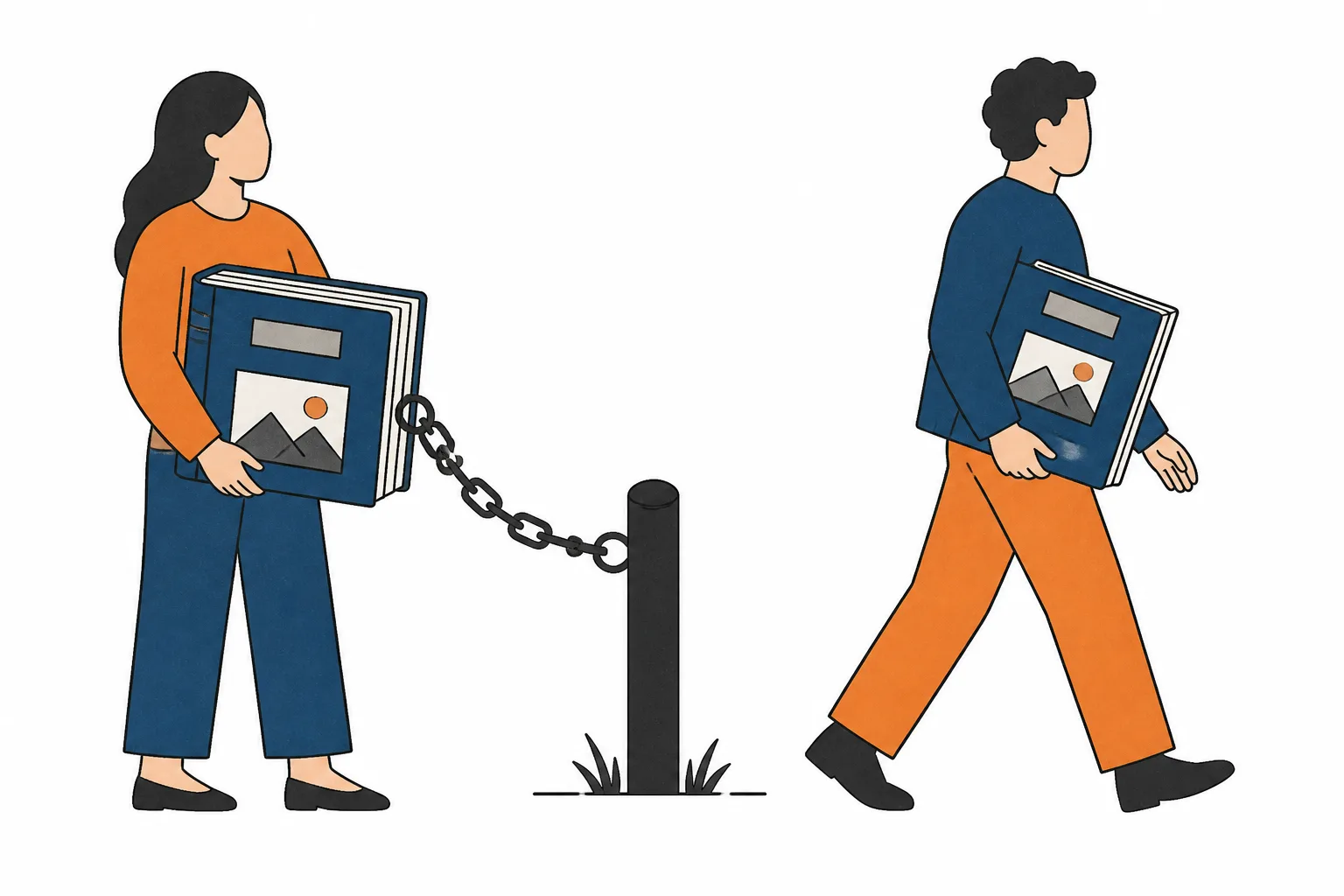
The first is reach. When you post, your followers do not all see it. The feed decides who sees what, and it changes without telling anybody. Some posts land, some vanish, and you have no say in which. That is not a conspiracy — it is what happens when a feed carries more content than there are hours to read it. But it does mean the audience you spent five years building is not an audience you can reliably speak to.
The second is ownership. Your page, your photos, your reviews, your messages and your customer conversations all sit on a platform you use for free. Pages do get restricted, and the reason is rarely explained well. Most come back. Some take weeks. If that page is the only place your business exists online, one email on a Tuesday morning can take the lot, and there is nobody to ring.
A website is not magic here. You can lose a domain by forgetting to pay for it. But you hold the deed. The pages are files you can copy. The domain is registered in your name. If the host irritates you, you move somewhere else and the address stays the same.
| Facebook page | Your own website | |
|---|---|---|
| Who decides who sees it | The feed does | Whoever goes looking |
| If the account is restricted | You have nothing | Unaffected |
| Where the content lives | On their servers | On files you can move |
| Cost of leaving | Everything stays behind | Move the files, keep the address |
| Turns up in Google | Sometimes, thinly | Yes, once it is set up properly |
| Good at | Regulars, recommendations, before-and-afters | Strangers with a problem right now |
The person with a leak at seven in the morning
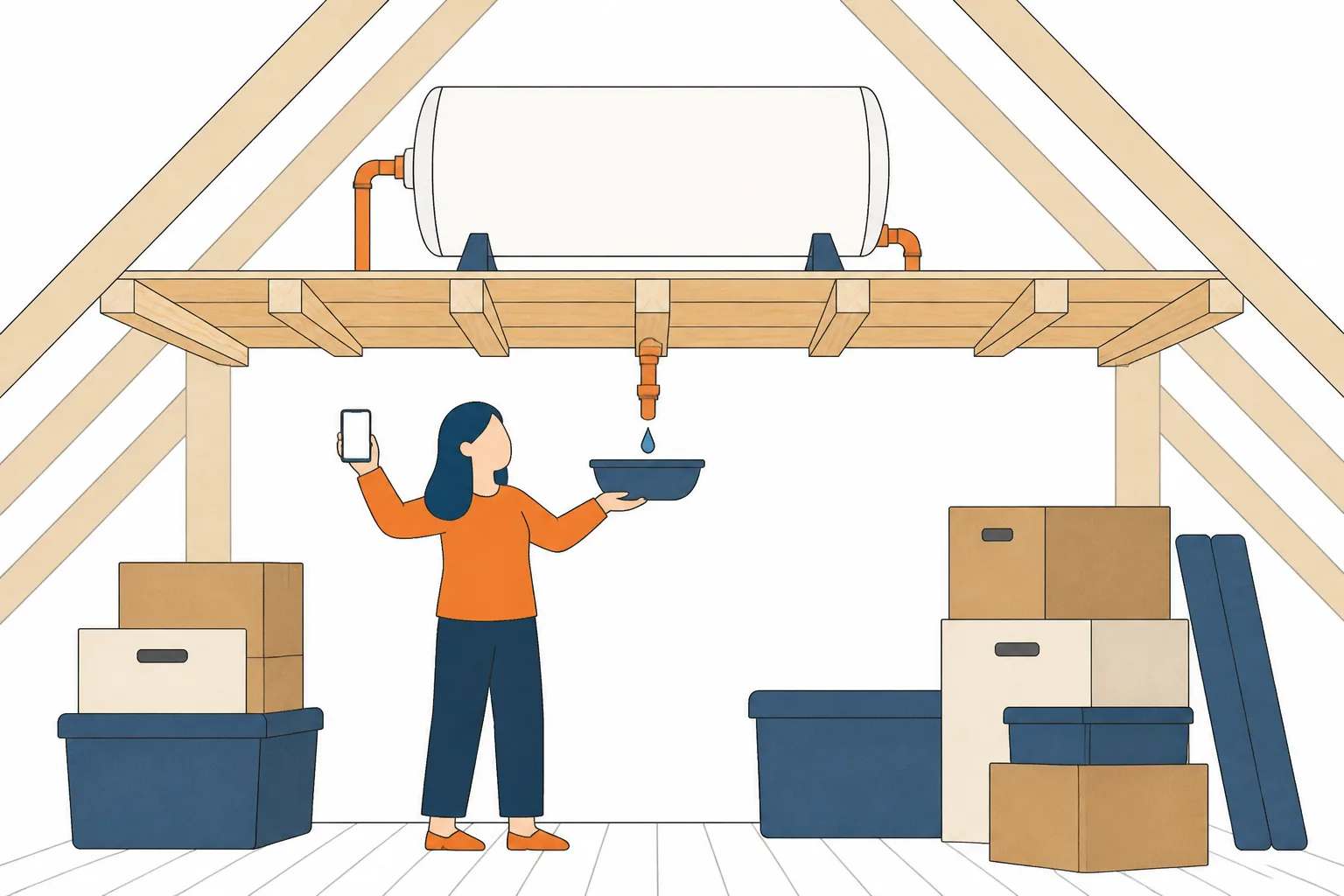
Picture the actual moment. A cylinder has let go in a loft in Bicester on a Sunday. The woman standing under it with a washing-up bowl is not opening Facebook. She is typing "emergency plumber Bicester" into her phone and she is going to ring one of the first three numbers she sees, probably within a minute.
Facebook pages do surface in Google now and then, but thinly and unpredictably. You cannot write a proper page about emergency call-outs in Bicester and expect the feed to file it under that. Search matches pages about specific things: one page per service, one per town, worded the way a customer would say it out loud rather than the way the trade says it.
This is the gap that costs real money, and it is the one people notice last, because a search you never appeared in leaves no trace behind. Your posts get the same likes they always did. The phone rings about as often as it did last year. Nothing looks broken.
- "boiler not firing up" — typed at half six, decided by seven.
- "emergency electrician near me" — the first few results get the call.
- "how much to re-felt a garage roof" — somebody gathering prices before they speak to anyone.
- "hairdresser open late Thursday Chelmsford" — a specific need, matched to a specific line on a page.
- "mot and service Whitstable" — a comparison, made in a car park.
Being checked out before the call
Most jobs have a step in the middle that you never see. Somebody gets your name off a neighbour, then looks you up before they dial. They are not shopping around. They have half decided already. They are checking that you are real.
What they are after takes about twenty seconds to find: that the business exists, that you are registered or insured with whoever matters in your trade, that other people have used you and were fine, and roughly what things cost. A well-kept Facebook page can show some of that. More often it shows a photo of the van from three summers ago and a post about the bank holiday.
This weighs more heavily as the job gets bigger, and with older customers. A ninety-pound tap washer gets booked on a recommendation and nothing else. A full rewire, a bathroom, a roof — those get looked up first, usually by two people in the same household. Letting agents and small commercial customers often need a web address before they can put you on their approved list at all.
Note. The site does not need to be clever. Your name, your trade, the towns you cover, your registration numbers and your phone number, on a page that loads before their patience runs out. That is most of the job.

What a website cannot do
It is worth being blunt about the limits, because websites get sold as though they were a marketing plan. They are not. A website is somewhere to send people, and a way to be found by people already looking for what you do. It does not create demand out of nothing.
It also will not fix a problem in the business. If the phone goes to voicemail all day, if quotes take a fortnight, if the reviews you do have are lukewarm, a website makes those things easier to find rather than harder. And it will never beat Facebook at the thing Facebook is genuinely good at — the recommendation thread, the local group, the person asking at nine on a Sunday night whether anyone knows a decent gardener.
- It will not replace word of mouth. Nothing does.
- It will not rank for anything in the first few weeks. Set up your Google Business Profile first and give the site a few months.
- It will not answer the phone, and most trade jobs still start with a phone call.
- It will not make you look better than you are for very long.
- It will not keep itself up to date, unless changing it is easy enough that you actually do.
The arrangement that works
The businesses that get this right do not choose between the two. They use each for the thing it is good at, and they keep the whole arrangement small enough to actually maintain between jobs.
Facebook does the moving part: finished work, the odd before and after, showing up in the group when somebody asks. That is where the relationship sits. The website does the fixed part: what you do, where you work, roughly what it costs, how to reach you and when. That is where the facts sit. When somebody in the group asks what you charge for a call-out, you send a link instead of typing it again.
The join between them is small and dull, which is why it gets skipped. Put the web address in the Facebook bio, on the van and at the bottom of your quotes. Put the phone number at the top of every page of the site. Write the business name, address and phone number identically in all three places, down to the punctuation, because that sameness is a good part of how local search decides you are a real business in a real town.
- Web address in the Facebook bio, on the van, on the quotes and on the invoices.
- Same business name, phone number and address everywhere, including your Google Business Profile.
- The best six photos on the site. The rest can live on Facebook.
- One page per service you want more of, named the way a customer names it.

Common questions
- Can I just use my Facebook page as my website?
- You can, and plenty of people do it for years. It holds up while your leads come from people who already know your name. It stops holding up the day you need to be found by somebody who does not.
- I have hardly any followers. Is a website even worth it?
- The case is stronger, not weaker. Search takes no notice of how many followers you have — it only cares whether there is a page matching what somebody typed. A small following and a decent site is a better position than a big following and nothing else.
- Will a website hurt my Facebook page?
- No. They pick up different people at different moments. If anything the page gets easier to run, because you can post a photo and a line rather than retyping your prices and your service area every time somebody asks in the comments.
- Is a Google Business Profile enough on its own?
- It is the most valuable free thing you can set up and for some one-person businesses it carries most of the load. It is thin, though. You cannot explain a service properly or show a run of finished jobs on it. Do that first, then decide about a site.
- How long before it pays for itself?
- A few months at least, and it depends on your trade and how competitive your area is. The sum is usually simple, though: one decent job tends to cover a year of a cheap site, so it is one job you needed, not a stream of them.